

If you’ve ever watched a succulent shrivel into dust or turned a delicate fiddle-leaf fig into a sad stick of regret, you are not alone.
The dirty secret of indoor gardening isn’t that you lack a ‘green thumb’—it’s that most popular houseplants sold in supermarkets were bred for tropical rainforest canopies, not air-conditioned apartments with forgetful caretakers. Fortunately, botanical evolution has engineered species that actively thrive on neglect. From plants with underground water reservoirs to species that perform photosynthesis under faint desk lamps, these 10 houseplants are virtually indestructible.
Whether you inhabit a dimly lit city apartment with north-facing windows or frequently travel for weeks at a stretch, these hardy botanicals will not only tolerate your busy lifestyle—they will actively green up your interior without demanding daily micro-management.
At-a-Glance Survival Matrix
| Plant & Botanical Name | Light Tolerance | Watering Routine | Pet Safety | Biological Superpower |
|---|---|---|---|---|
| #01 Snake Plant Sansevieria trifasciata |
Low to Direct Sun | Every 3–4 Weeks | Toxic | CAM Respiration & Thick Drought Rhizomes |
| #02 ZZ Plant Zamioculcas zamiifolia |
Very Low to Medium | Every 3–5 Weeks | Toxic | Subterranean Tuber Reservoirs |
| #03 Golden Pothos Epipremnum aureum |
Low to Bright Indirect | Every 1–2 Weeks | Toxic | Visible Thirst Signals & Rapid Hydro-Rebound |
| #04 Cast Iron Plant Aspidistra elatior |
Deep Shade to Filtered | Every 2–3 Weeks | Pet-Safe | Dense Fibrous Leaves Immune to Dry Heat |
| #05 Spider Plant Chlorophytum comosum |
Low to Bright Indirect | Every 7–10 Days | Pet-Safe | Fleshy Root Sponges & Self-Cloning Runlets |
| #06 Chinese Evergreen Aglaonema commutatum |
Low to Ambient Light | Every 2–3 Weeks | Toxic | Ultra-Slow Metabolism & Low Humidity Tolerance |
| #07 Ponytail Palm Beaucarnea recurvata |
Bright Indirect to Direct Sun | Every 3–4 Weeks | Pet-Safe | Bulbous Trunk Caudex Holds Gallons of Water |
| #08 Jade Plant Crassula ovata |
Bright Direct Sunlight | Every 2–4 Weeks | Toxic | Heavy Succulent Leaves Living 50–70 Years |
| #09 Rubber Tree Ficus elastica |
Medium to Bright Indirect | Every 10–14 Days | Toxic | Thick Waxy Cuticle Stops Moisture Loss |
| #10 Aloe Vera Aloe barbadensis Miller |
Full Direct Sun | Every 3–4 Weeks | Toxic | 99% Water Medicinal Gel Storage |
#01. Snake Plant (Mother-in-Law’s Tongue)
Botanical Name: Sansevieria trifasciata / Dracaena trifasciata
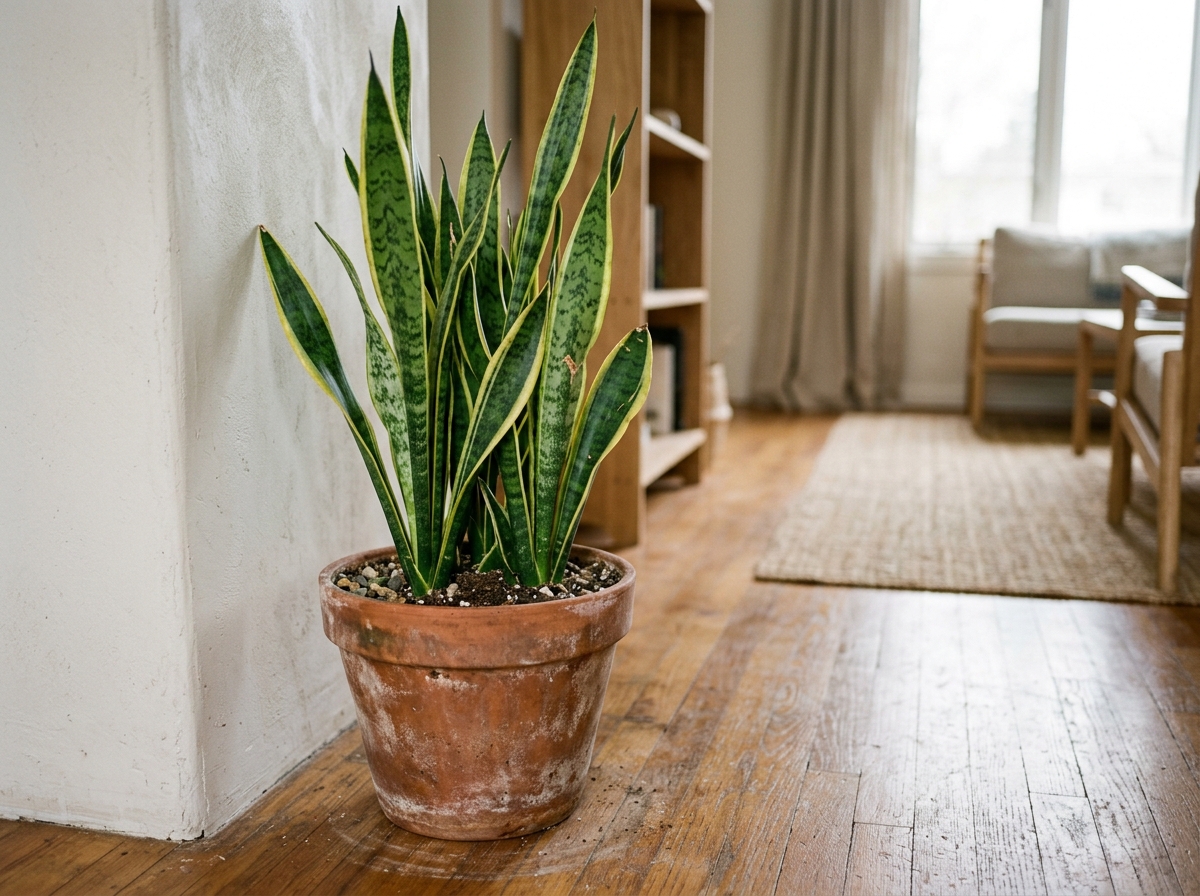
☀️ Light: Low light to direct south-facing sunlight
💧 Water: Once every 3–4 weeks (let soil turn bone dry)
🐾 Safety: ⚠️ Toxic to Pets (Keep out of reach of dogs & cats)
⚡ Difficulty: 1/10 (Virtually Indestructible)
If houseplants were awarded military armor, the Snake Plant would lead the charge. Native to the harsh, arid soils of West Africa, this botanical titan doesn’t merely survive forgetfulness—it positively thrives on it. What makes it impossible to kill is its specialized Crassulacean Acid Metabolism (CAM): unlike ordinary plants that open their pores during the day and bleed precious moisture, the Snake Plant keeps its stomata locked down tight until nightfall. You can leave for a four-week holiday, shut the blinds, and return to find it standing as proud, upright, and architectural as the day you left.
🌿 Horticulturist’s Insider Secret: The ONLY way to kill this plant is over-nurturing. Watering once a week will cause root rot, turning its stiff spears into yellow mush. When in doubt, wait an extra 10 days.
Optimal Placement: Dim bedroom corners, low-light home offices, or right by an east/south window.
#02. ZZ Plant (Eternity Plant)
Botanical Name: Zamioculcas zamiifolia
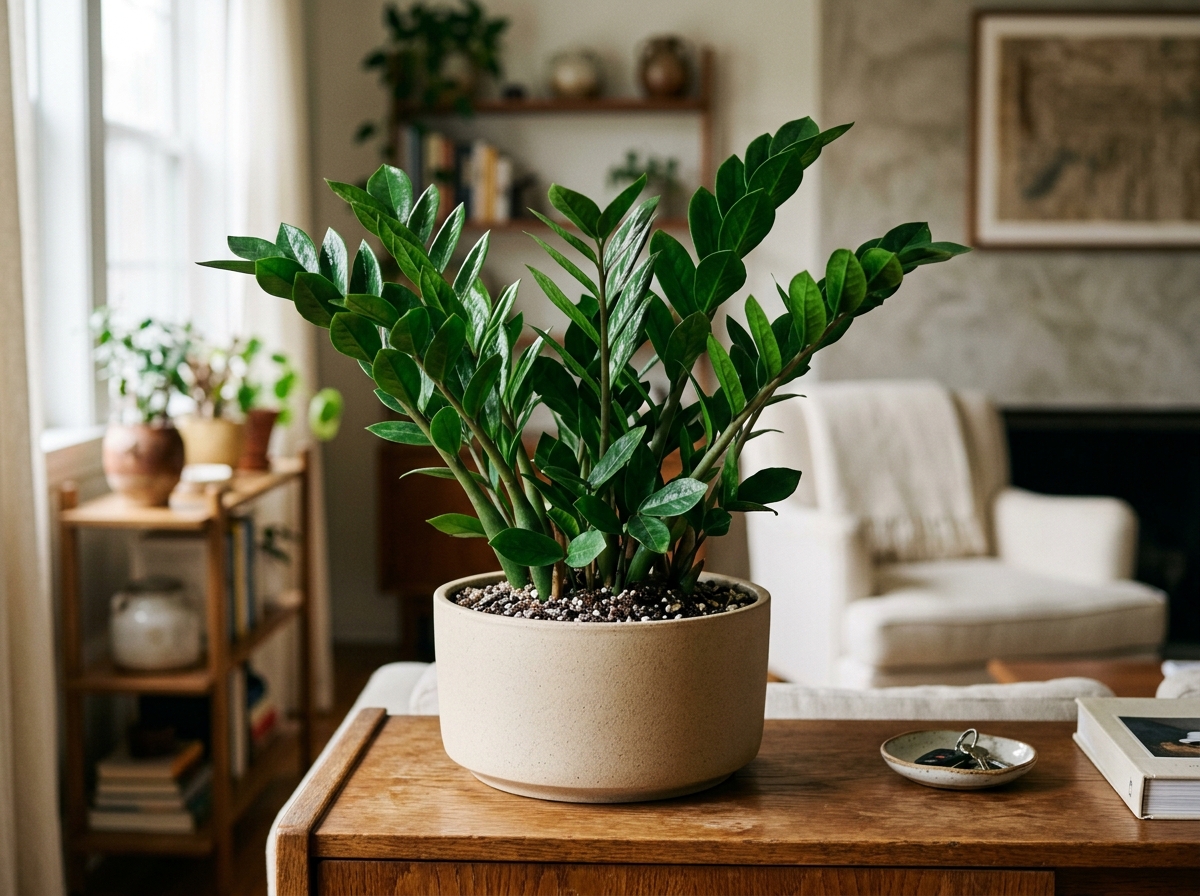
☀️ Light: Windowless rooms, fluorescent glow, to medium indirect
💧 Water: Every 3–5 weeks (thrives on drought)
🐾 Safety: ⚠️ Toxic to Pets (Keep out of reach of dogs & cats)
⚡ Difficulty: 1/10 (Undead Botanical)
Referred to by botanists as the ‘Eternity Plant’, the ZZ plant looks so polished and sculpted that dinner guests will instinctively tap the leaves to check if it’s faux. Beneath its mirror-like foliage lies an evolutionary masterpiece: thick underground rhizomes that look like small potatoes. These act as subterranean water reservoirs, storing emergency hydration for months of zero rain. Drought-deciduous in its native East African savannah, the ZZ plant can survive in windowless interior offices running on nothing more than standard fluorescent ceiling lights.
🌿 Horticulturist’s Insider Secret: If leaves start dropping from prolonged drought, don’t throw it out. Give it a thorough bottom soak in the sink, allow excess water to drain out, and watch fresh bright lime-green stems erupt within weeks.
Optimal Placement: Windowless bathrooms, basement dens, dark hallways, or home offices.
#03. Golden Pothos (Devil’s Ivy)
Botanical Name: Epipremnum aureum
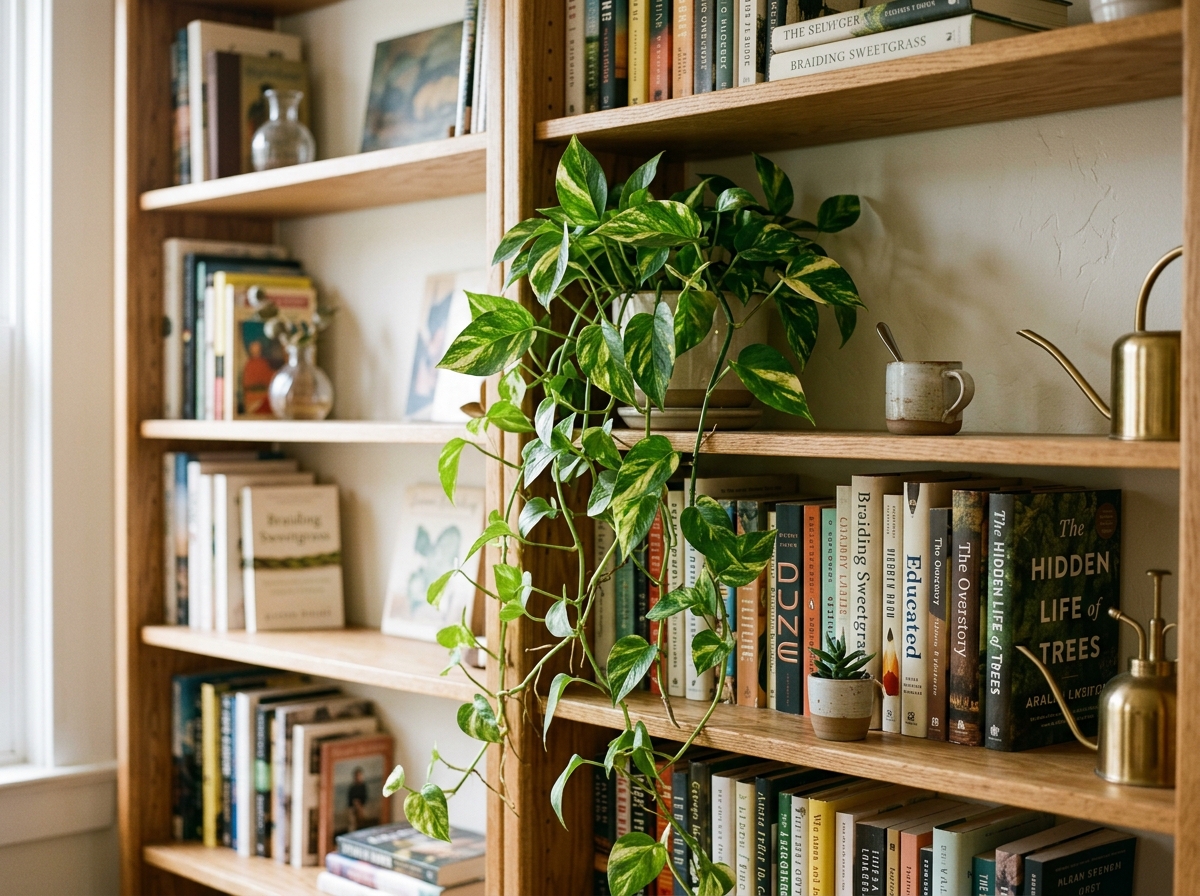
☀️ Light: Low, medium, or bright indirect light
💧 Water: Every 7–14 days (tells you when it’s thirsty)
🐾 Safety: ⚠️ Toxic to Pets (Keep out of reach of dogs & cats)
⚡ Difficulty: 2/10 (The Ultimate Communicator)
Pothos earned the nickname ‘Devil’s Ivy’ because it is essentially impossible to kill and stays green even in near-dark conditions. In tropical rainforests, it climbs 40-foot canopies; in your home, its heart-shaped variegated vines will happily drape across floating shelves, curtain rods, and bookcases. What makes Pothos a beginner’s dream is its crystal-clear communication. When dehydrated, its leaves lose turgor pressure and subtly droop. Give it a glass of water, and within two to three hours, every vine perches back up with crisp vitality.
🌿 Horticulturist’s Insider Secret: Prune long tendrils every spring and stick the snipped nodes into water. Within 10 days, healthy roots will form, giving you an endless supply of free baby plants.
Optimal Placement: Top of bookshelves, floating shelves, or hanging baskets near ambient light.
#04. Cast Iron Plant (The Victorian Legend)
Botanical Name: Aspidistra elatior
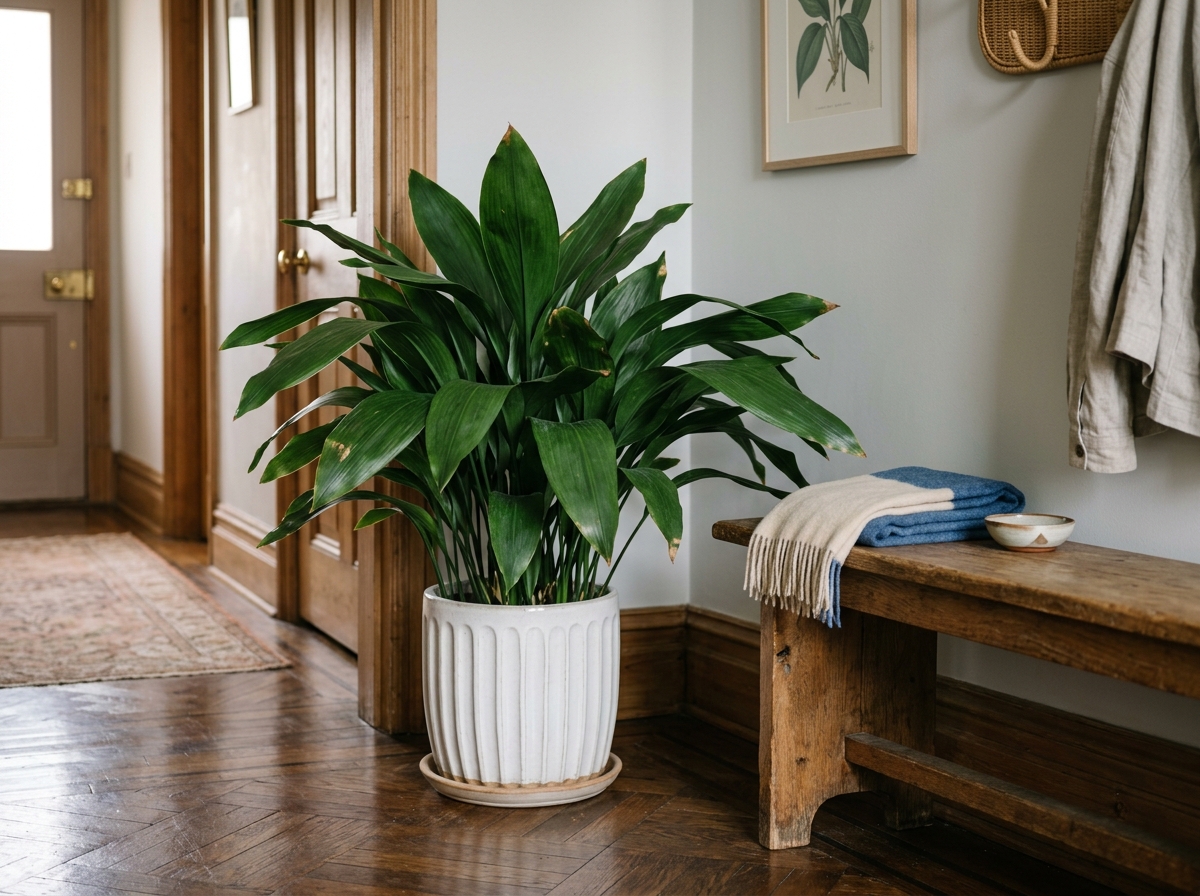
☀️ Light: Deep shade to soft filtered light (no direct sun)
💧 Water: Every 2–3 weeks (prefers dry soil over wet)
🐾 Safety: ✅ 100% Pet-Safe (ASPCA Certified Non-Toxic)
⚡ Difficulty: 1.5/10 (Tough As Anvil)
For pet owners seeking a resilient plant that poses zero danger to cats or dogs, the Cast Iron Plant is peerless. In Victorian Britain, domestic parlors were dimly lit, drafty, and laced with toxic fumes from coal gas lamps—conditions that withered almost every living plant. The Aspidistra didn’t just survive; it thrived, earning its legendary ‘cast iron’ moniker. Its broad, arching foliage is naturally resistant to low humidity, drafts, dust, and prolonged neglect.
🌿 Horticulturist’s Insider Secret: Keep it out of direct sunlight. Because it evolved under dense Japanese forest floors, direct ultraviolet rays will scorch its deep forest-green leaves.
Optimal Placement: Drafty entryway corridors, north-facing living rooms, and homes with mischievous pets.
#05. Spider Plant (Airplane Plant)
Botanical Name: Chlorophytum comosum
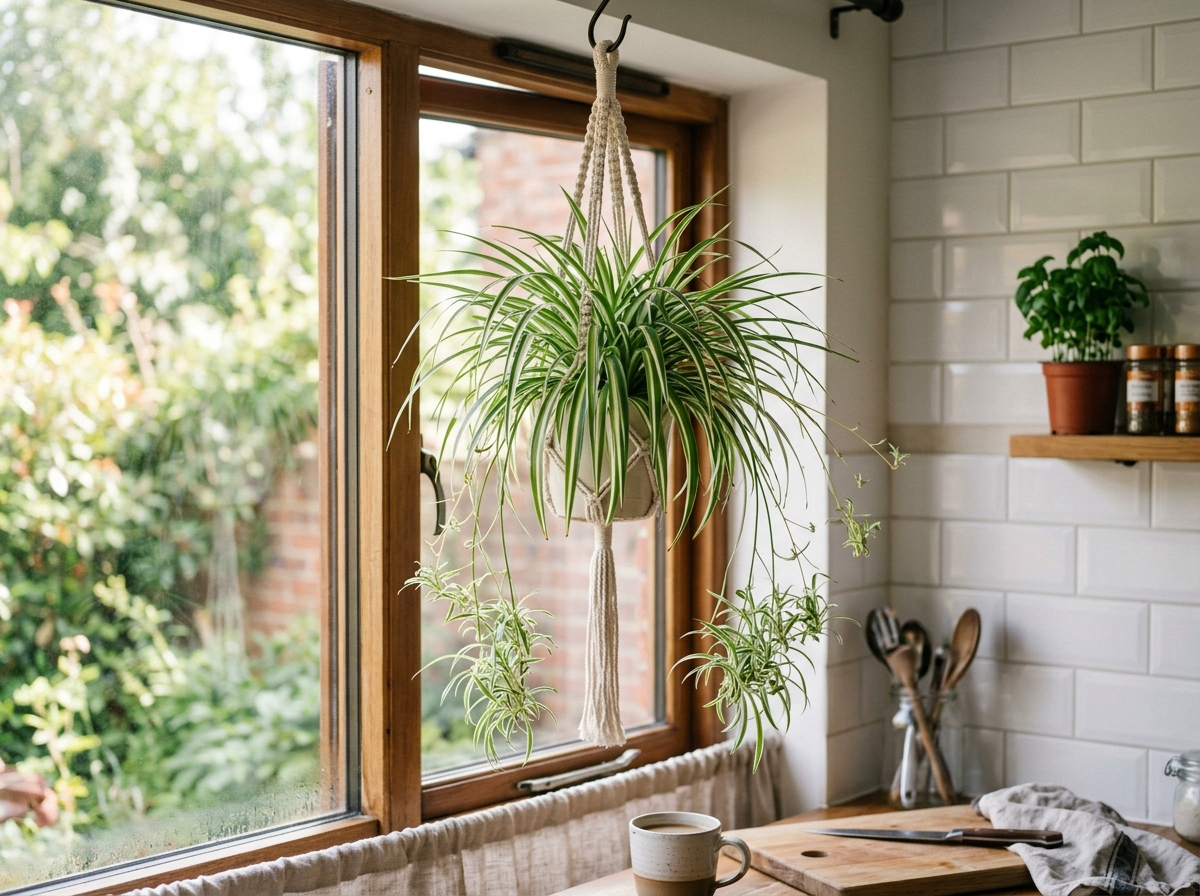
☀️ Light: Moderate indirect light to low ambient light
💧 Water: Every 7–10 days (spring/summer), 14 days (winter)
🐾 Safety: ✅ 100% Pet-Safe (ASPCA Certified Non-Toxic)
⚡ Difficulty: 2/10 (Prolific Multiplier)
A perennial favorite since the 1970s, the Spider Plant refuses to give up on life. Deep beneath the potting mix, Chlorophytum grows thick, tuberous roots that look like miniature white carrots. These tubers serve as water sponges, safeguarding the plant against irregular watering habits. As the plant matures, it sends out arching runners decorated with miniature star-shaped white blossoms and hanging ‘spiderettes’ ready to be potted into new plants.
🌿 Horticulturist’s Insider Secret: If the tips of the leaves turn brown, it’s rarely a sign of thirst—it’s usually caused by fluoride and mineral salts found in tap water. Switch to filtered water or rainwater to keep the tips emerald green.
Optimal Placement: Macrame hangers in kitchens, bathroom windowsills, or high shelves.
#06. Chinese Evergreen (Aglaonema)
Botanical Name: Aglaonema commutatum
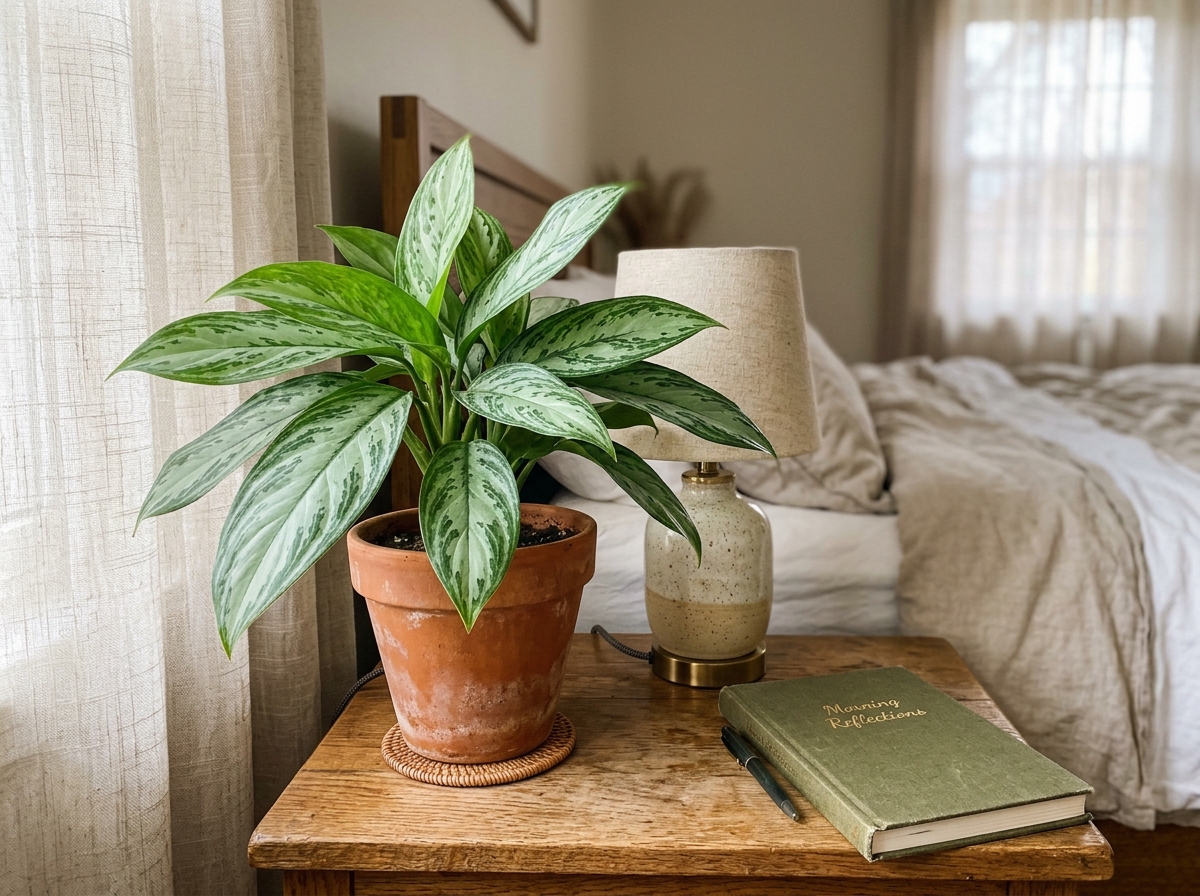
☀️ Light: Low light, artificial light, to bright filtered light
💧 Water: Every 2–3 weeks (allow top 50% to dry)
🐾 Safety: ⚠️ Toxic to Pets (Keep out of reach of dogs & cats)
⚡ Difficulty: 2/10 (Low-Light Masterpiece)
Most low-light tolerant plants come in one monotonous shade: dark, utilitarian green. Chinese Evergreen shatters that mold by bringing breathtaking silver, pewter, and blush patterns into the dimmest corners of your home. Adapted to the dense, shaded understory of Asian subtropical forests, it operates on a remarkably slow metabolic pace. It doesn’t demand frequent fertilizer, handles dry winter heating effortlessly, and won’t drop leaves when you forget a watering cycle.
🌿 Horticulturist’s Insider Secret: Varieties with darker green and silver foliage (such as ‘Silver Bay’) need very little light. If you opt for vibrant pink or red Aglaonemas, give them slightly brighter indirect light to preserve their vivid coloration.
Optimal Placement: Bedside tables, home office desks, or living room credenzas away from drafty doors.
#07. Ponytail Palm (Elephant’s Foot)
Botanical Name: Beaucarnea recurvata
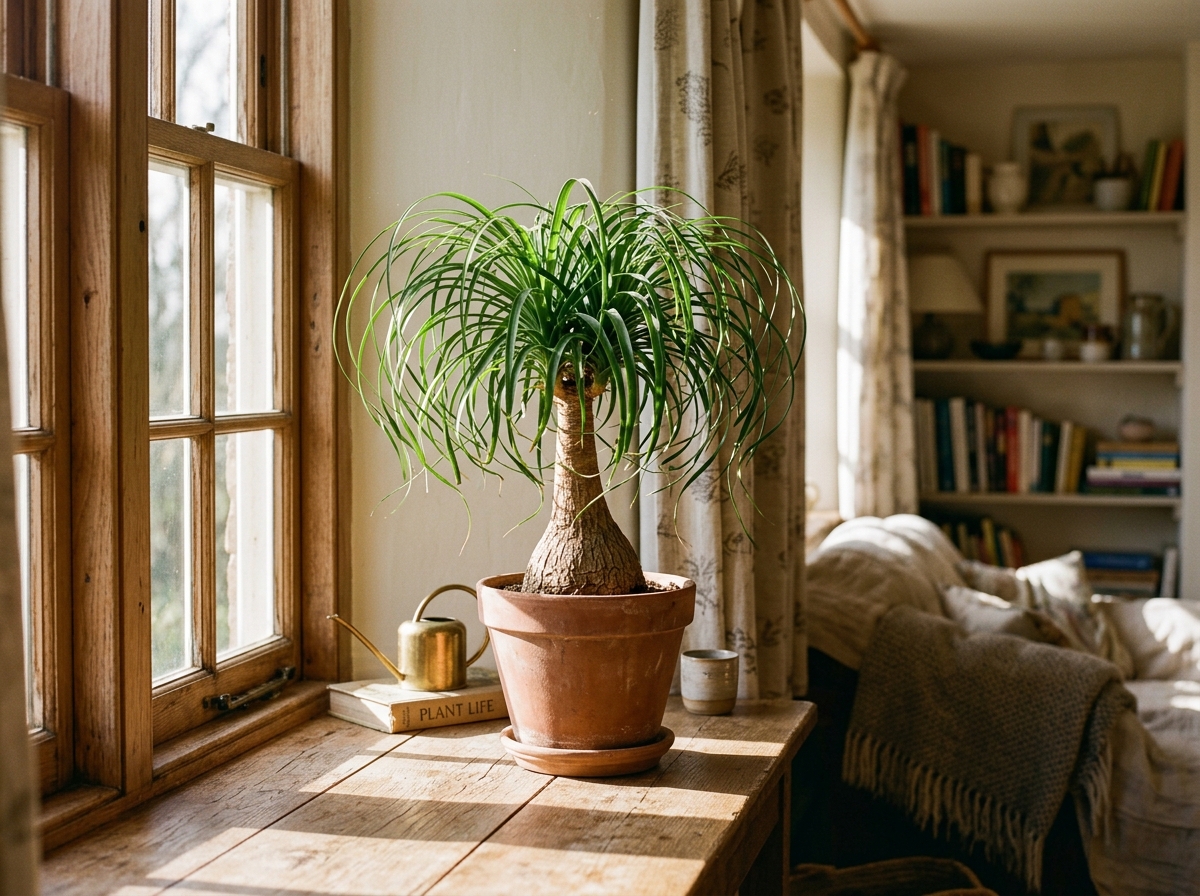
☀️ Light: Bright indirect to direct sun
💧 Water: Every 3–4 weeks (soak & dry completely)
🐾 Safety: ✅ 100% Pet-Safe (ASPCA Certified Non-Toxic)
⚡ Difficulty: 1.5/10 (Desert Water Vault)
Despite its palm-like crown of curly cascading leaves, the Ponytail Palm is actually a desert succulent closely related to the agave and yucca families. Its biological superpower is impossible to miss: a heavy, swollen, bulbous base known as a caudex. In its native semi-desert regions of eastern Mexico, this trunk acts as a living water reservoir, holding gallons of moisture to survive months of scorching arid heat.
🌿 Horticulturist’s Insider Secret: Water it strictly like a cactus. Soak the soil until water runs freely through the drainage hole, then ignore it until the soil is 100% dry. Watering on a typical houseplant schedule will quickly cause base rot.
Optimal Placement: Sunny south- or west-facing windows, bright sunrooms, or well-lit living spaces.
#08. Jade Plant (Money Tree)
Botanical Name: Crassula ovata
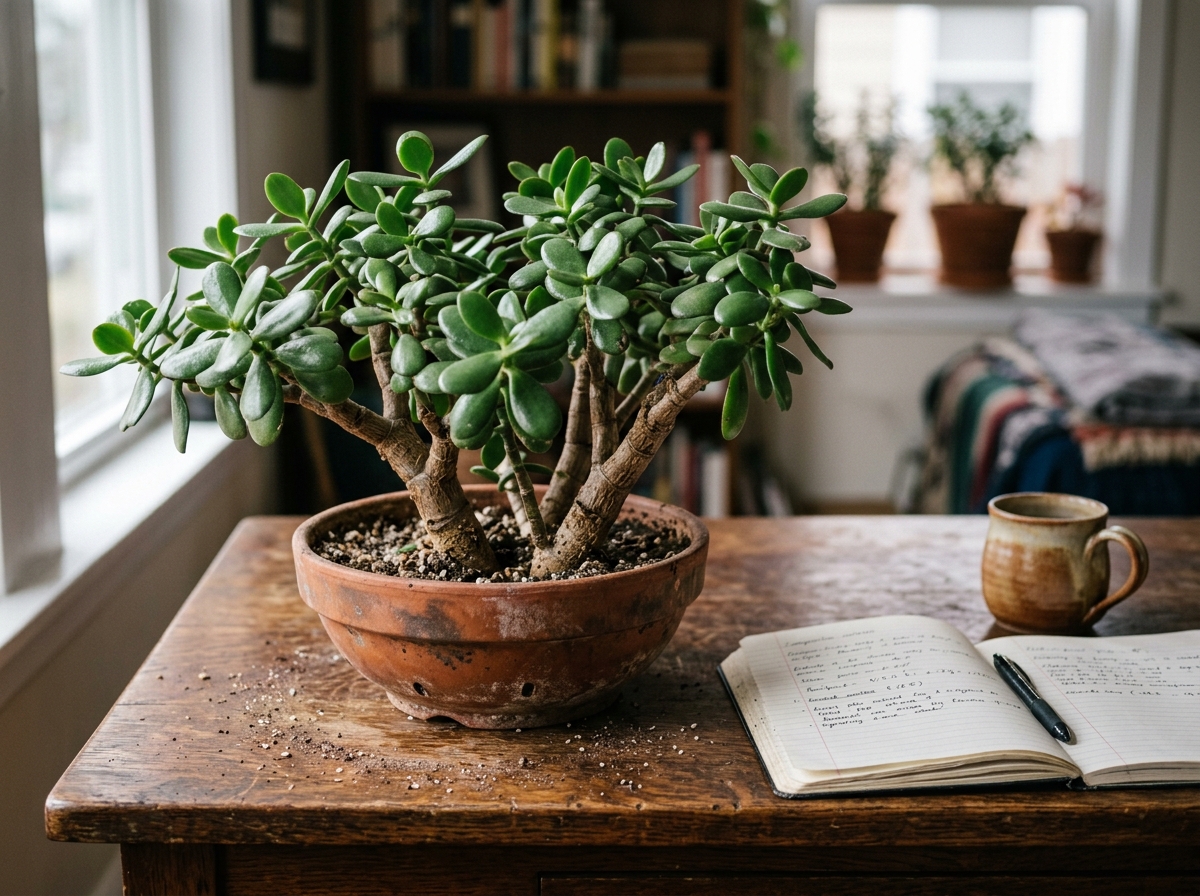
☀️ Light: Direct sunlight or bright indirect light (4–6 hours)
💧 Water: Every 2–4 weeks (leaves wrinkle when thirsty)
🐾 Safety: ⚠️ Toxic to Pets (Keep out of reach of dogs & cats)
⚡ Difficulty: 2/10 (Living Heirloom)
Celebrated in Feng Shui as a bearer of prosperity and good fortune, the Jade Plant is famous for an even greater quality: near-immortality. Featuring thick, miniature tree-like woody trunks and plump, teardrop succulent leaves, Crassula ovata routinely lives for 50 to 70 years in ordinary homes, frequently passed down across generations. Each leaf functions as an individual hydration reservoir; during dry spells, the plant simply draws from its internal store.
🌿 Horticulturist’s Insider Secret: Perform the pinch test: if the leaves feel firm and plump like ripe grapes, do not water. If they feel slightly soft with subtle surface wrinkles, give it a thorough watering. Always use a gritty succulent potting mix.
Optimal Placement: Sunny kitchen windowsills, sunny home office desks, or bright south-facing ledges.
#09. Rubber Tree (Burgundy Ficus)
Botanical Name: Ficus elastica
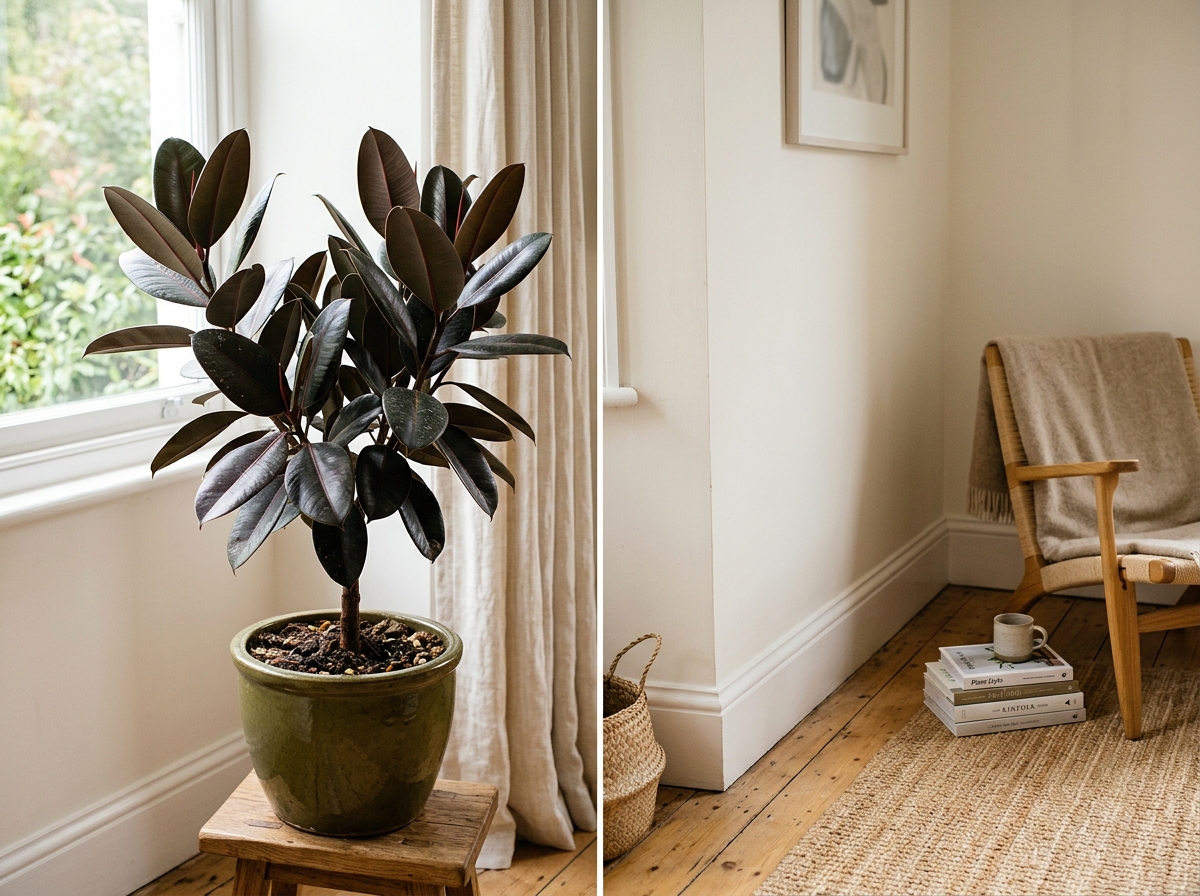
☀️ Light: Medium to bright indirect light
💧 Water: Every 10–14 days (let top 2 inches dry)
🐾 Safety: ⚠️ Toxic to Pets (Keep out of reach of dogs & cats)
⚡ Difficulty: 2.5/10 (The Resilient Statement Plant)
While its notorious sister—the Fiddle-Leaf Fig—drops its leaves if you so much as sneeze in its vicinity, the Burgundy Rubber Tree is an ironclad giant. Sporting massive, leathery leaves with a glossy deep-burgundy sheen, Ficus elastica produces a thick waxy cuticle layer over its foliage. This protective barrier stops water vapor from evaporating into dry heated indoor air, keeping the plant hydrated far longer than delicate houseplants.
🌿 Horticulturist’s Insider Secret: Gently wipe its glossy foliage once a month with a damp cotton cloth. Dust accumulation blocks sunlight absorption and dulls the lustrous patent-leather sheen of the leaves.
Optimal Placement: Bright living room corners, near curtained windows, or open airy studio spaces.
#10. Aloe Vera (The Medicinal Survivor)
Botanical Name: Aloe barbadensis Miller
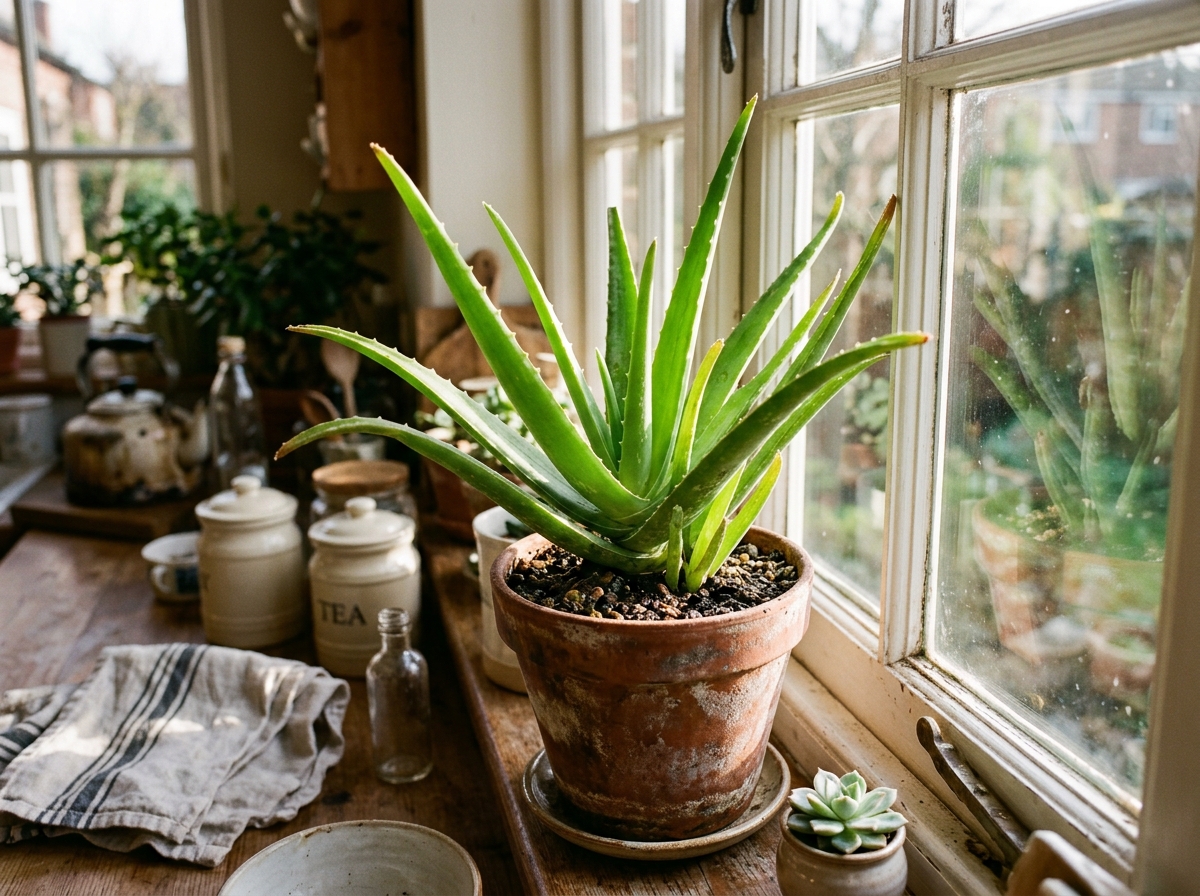
☀️ Light: Full direct sun (at least 6 hours daily)
💧 Water: Every 3–4 weeks in summer; once every 6 weeks in winter
🐾 Safety: ⚠️ Toxic to Pets (Keep out of reach of dogs & cats)
⚡ Difficulty: 1.5/10 (Sun-Loving Powerhouse)
Revered by ancient cultures as the ‘Plant of Immortality,’ Aloe Vera easily earns its place among the hardest plants to kill. Its upright, serrated spears contain a dense gel composed of 99% pure water packed with amino acids and vitamins. Native to the arid, sun-scorched landscapes of the Arabian Peninsula, it has evolved to withstand brutal heat waves, intense direct sunlight, and nutrient-poor, rocky ground.
🌿 Horticulturist’s Insider Secret: Plant your Aloe exclusively in an unglazed terracotta pot with drainage. Unglazed clay breathes and pulls residual moisture away from the root ball, protecting it from rot.
Optimal Placement: Kitchen windowsills, sunny balcony perches, or sun-drenched countertops.
The Black Thumb Survival Guide: 4 Rules to Live By
Before you bring your new hardy companion home, commit these four foundational rules to memory. They will protect you from the #1 cause of houseplant demise: loving your plant to death.
01. Rule of the Two-Inch Finger Test
Never water according to a strict calendar date (e.g. ‘every Sunday’). Room temperature, radiator heat, and seasonal light change soil dry-down rates dramatically. Push your index finger two inches deep into the soil. If you detect even a whisper of coolness or moisture, do not water. Only water when the soil feels crumbly and bone dry.
02. The Non-Negotiable Drainage Rule
Pots without drainage holes are death traps for 99% of houseplants. Water stagnates at the bottom, creating an anaerobic breeding ground for pythium and phytophthora root-rot fungi. Always use pots with drainage holes, or keep the plant in its plastic nursery liner inside your decorative pot.
03. Underwatered = Fixable. Overwatered = Fatal
An underwatered plant will drop slightly, wrinkle its leaves, and bounce back to life within two hours of a deep drink. An overwatered plant develops rotten, dead roots that can no longer absorb water or oxygen—killing the plant beyond rescue. When in doubt, always wait another week.
04. Light Controls Thirst
Plants consume water through photosynthesis and transpiration. A plant living in a dim corner uses water at one-third the rate of a plant in a sunny window. If you position a plant in low light, cut your watering routine in half.
Frequently Asked Questions
Which houseplant is truly the hardest to kill of all time?
The Snake Plant (Sansevieria) and ZZ Plant (Zamioculcas zamiifolia) are tied for first place. Both feature subterranean rhizomes that store water for months, operate on drought-adapted respiration, and can survive up to two months of total neglect in low light without shedding leaves.
Can any of these plants survive in a windowless room?
Yes. Both the ZZ Plant and Snake Plant can thrive in rooms with zero natural sunlight, provided there is standard fluorescent or LED overhead lighting on for 8 to 10 hours a day. Golden Pothos can also survive under artificial light, though its variegation will turn solid green.
Which hard-to-kill plants are 100% pet-safe for cats and dogs?
The Cast Iron Plant (Aspidistra elatior), Spider Plant (Chlorophytum comosum), and Ponytail Palm (Beaucarnea recurvata) are 100% non-toxic and certified pet-safe by the ASPCA.
Why do my houseplants die even though I water them every few days?
Over-watering is the #1 cause of houseplant death worldwide. Frequent watering drowns the roots, starving them of essential oxygen and causing lethal fungal root rot. Plants don’t die from lack of love—they die from too much attention.
What are Google Discover’s image requirements for gardening articles?
Google Discover requires the primary featured image to be at least 1200px wide, formatted in a 16:9 aspect ratio, and backed by the robots meta tag ‘max-image-preview:large’. Discover prioritizes authentic, high-quality editorial photography over generic stock or synthetic-looking AI images.
Final Thoughts: Start With One
Building an indoor jungle doesn’t require innate talent or botanical genius—it simply requires choosing species that match your home environment and lifestyle. Pick one or two resilient beauties from this list, place them in a pot with drainage, give them a warm welcome, and then proudly step back and let them do what they do best: survive and flourish.


0 Comments