

With escalating summer heatwaves, unpredictable rainfall, and municipal water restrictions, the era of thirsty, high-maintenance landscapes is coming to a close.
Cultivating a climate-resilient garden does not mean settling for a barren wasteland of crushed gravel and dry cacti. Modern water-wise landscaping—often called xeriscaping—relies on an extraordinary palette of tough-as-nails perennials, native prairie workhorses, and Mediterranean subshrubs. These botanical marvels have evolved specialized physiological adaptations—from silvery reflective foliage and waxy cuticle coatings to deep subterranean taproots—allowing them to burst with vivid color, sweet perfumes, and humming pollinators on negligible rainfall. Here are 10 of the best low-water plants for drought-prone gardens.
Whether you’re contending with prolonged summer droughts, municipal hosepipe bans, or dry sandy slopes, here are 10 exceptional low-water plants for drought-prone gardens that deliver non-stop beauty with minimal supplemental irrigation.
Drought-Tolerant Plants Comparison Matrix
| Plant & Botanical Name | Mature Size | Hardiness | Water Need | Drought Superpower |
|---|---|---|---|---|
| #01 English Lavender Lavandula angustifolia |
2–3 ft H x 2–3 ft W | Zones 5–9 | Very Low (Once established) | Aromatic oils deter pests & deer; thrives in lean gravel |
| #02 Russian Sage Salvia yangii (Perovskia) |
3–4 ft H x 3–4 ft W | Zones 4–9 | Extremely Low | Billowing cloud of lavender-blue plumes all summer |
| #03 Purple Coneflower Echinacea purpurea |
2–4 ft H x 1.5–2 ft W | Zones 3–9 | Low to Moderate | Deep taproot hunts subsoil moisture; top pollinator draw |
| #04 Stonecrop Sedum Hylotelephium ‘Autumn Joy’ |
1.5–2 ft H x 2 ft W | Zones 3–9 | Very Low | CAM succulent leaves store water internally; 4-season structure |
| #05 Black-Eyed Susan Rudbeckia fulgida ‘Goldsturm’ |
2–3 ft H x 2 ft W | Zones 3–9 | Low | Blooms continuously for 12+ weeks in parched soil |
| #06 Moonshine Yarrow Achillea ‘Moonshine’ |
1.5–2 ft H x 1.5–2 ft W | Zones 3–8 | Extremely Low | Silver feathery foliage reflects solar heat; landing-pad blooms |
| #07 Parry’s Agave Agave parryi |
2 ft H x 2.5 ft W | Zones 7–10 (Cold-hardy) | Minimal (Desert native) | Architectural silver-blue geometric focal point |
| #08 Globe Thistle Echinops ritro |
3–4 ft H x 2–3 ft W | Zones 3–9 | Very Low | Metallic steel-blue spheres; impervious to clay & drought |
| #09 Blanket Flower Gaillardia x grandiflora |
1–1.5 ft H x 1.5–2 ft W | Zones 3–10 | Very Low | Fiery two-tone petals that never scorch in baking sun |
| #10 Red Yucca Hesperaloe parviflora |
3–5 ft H (flower) x 3–4 ft W | Zones 5–10 | Extremely Low | Evergreen succulent wands attracting hummingbirds |
#01. English Lavender (Lavandula angustifolia (‘Munstead’ / ‘Hidcote’))
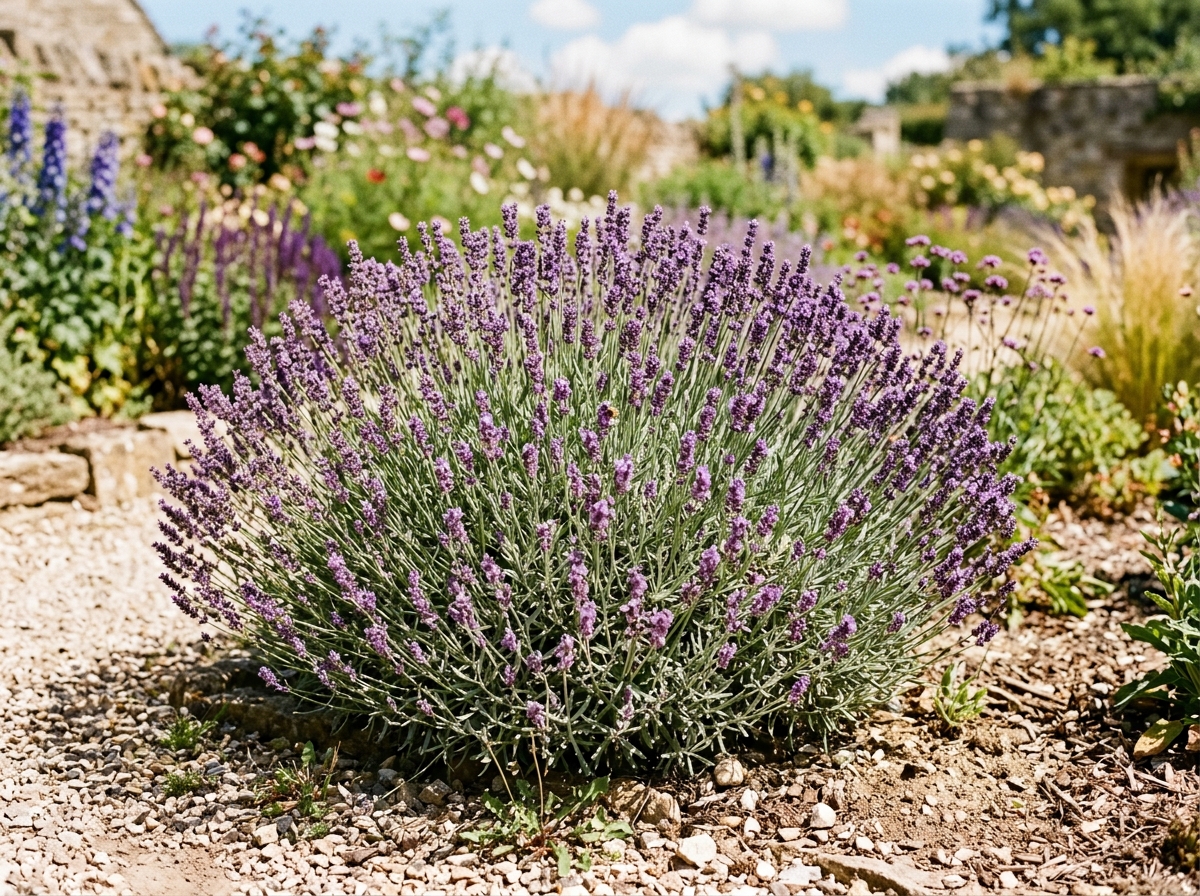
English Lavender is the undisputed royalty of the dry Mediterranean garden. Hailing from the sun-drenched rocky limestone slopes of Southern Europe, lavender possesses narrow, silvery-grey needle foliage covered in microscopic glandular trichomes. These hairs reflect intense ultraviolet solar rays and trap a layer of humid air against the leaf surface, dramatically reducing transpiration water loss.
Growing Profile & Adaptations
USDA Zones 5–9. Requires at least 6 to 8 hours of uninterrupted, direct full sun and lean, alkaline to neutral soil (pH 6.5–7.8). Sharp drainage is an absolute non-negotiable—lavender roots will quickly succumb to Phytophthora root rot if forced to sit in soggy, heavy clay soil during cold winter months.
Landscape Companion Plants: Pairs flawlessly with Russian Sage, White Gaura, Stipa tenuissima (Mexican Feather Grass), and David Austin shrub roses.
🌿 Horticulturist Pro-Tip: Mulch lavender exclusively with crushed limestone gravel or pea stone rather than wood mulch. Gravel reflects heat into the canopy to enhance essential oil production and prevents the moisture retention that rots the plant’s delicate woody root collar.
#02. Russian Sage (Salvia yangii (formerly Perovskia atriplicifolia))
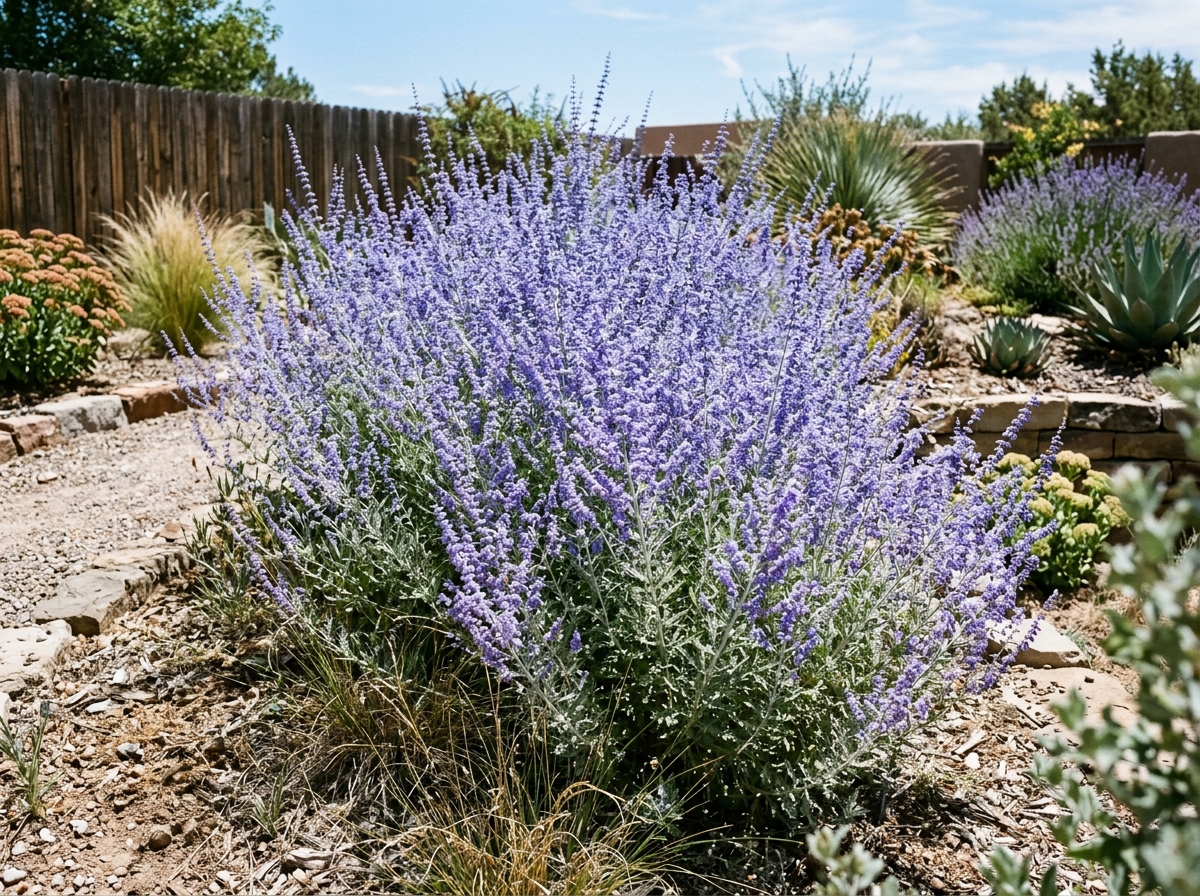
Native to the rocky, arid steppes of southwestern and central Asia, Russian Sage is practically indestructible once established. From midsummer through late autumn, it forms an expansive, 4-foot billowing cloud of ethereal lavender-blue flower spires held on ghost-like white stems. Even in 100°F (38°C) heatwaves and parched soil, Russian Sage never wilts.
Growing Profile & Adaptations
USDA Zones 4–9. Demands baking full sun and poor to average, well-draining soil. Rich, heavily fertilized soils cause the stems to become weak and flop over. It thrives in high heat, humidity, and coastal salt air, and is 100% deer- and rabbit-proof thanks to its pungent sage-like herbal aroma.
Landscape Companion Plants: Stunning when combined with golden Black-Eyed Susans, Echinacea, Sedum ‘Autumn Joy’, and ornamental switchgrass (Panicum virgatum).
🌿 Horticulturist Pro-Tip: Cut stems back hard in early spring to within 4 to 6 inches of the woody base just as new green buds emerge. This triggers a dense flush of stout, upright flowering stems that won’t require staking.
#03. Purple Coneflower (Echinacea purpurea)
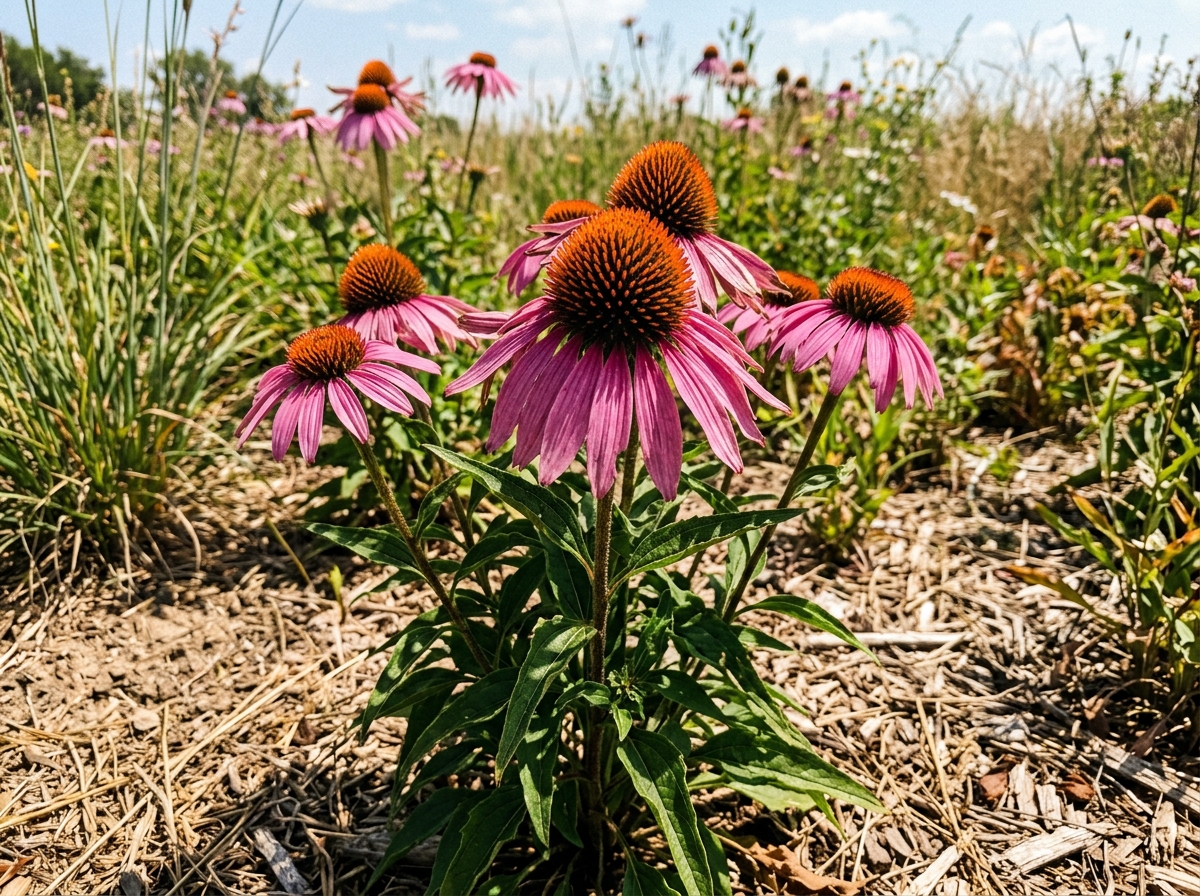
A celebrated staple of North American tallgrass prairies, the Purple Coneflower is an ecological dynamo that laughs at summer droughts. Its botanical secret weapon is a robust, fleshy taproot that plunges 4 to 5 feet into the subsoil, mining deep subterranean moisture reserves that shallow-rooted garden annuals cannot access.
Growing Profile & Adaptations
USDA Zones 3–9. Incredibly adaptable to sandy loam, rocky soils, and even moderately heavy clay, provided water does not pool in winter. Requires full sun to keep stems upright. Flowers continuously from late June through first frost.
Landscape Companion Plants: Excellent alongside Butterfly Weed (Asclepias tuberosa), Coreopsis, Little Bluestem grass (Schizachyrium scoparium), and Liatris spicata.
🌿 Horticulturist Pro-Tip: Do not deadhead the final flush of coneflowers in late August. Leave the rigid prickly seed heads standing through the winter months; American goldfinches rely on the nutritious cone seeds for survival during heavy snowstorms.
#04. Stonecrop Sedum ‘Autumn Joy’ (Hylotelephium spectabile ‘Autumn Joy’)
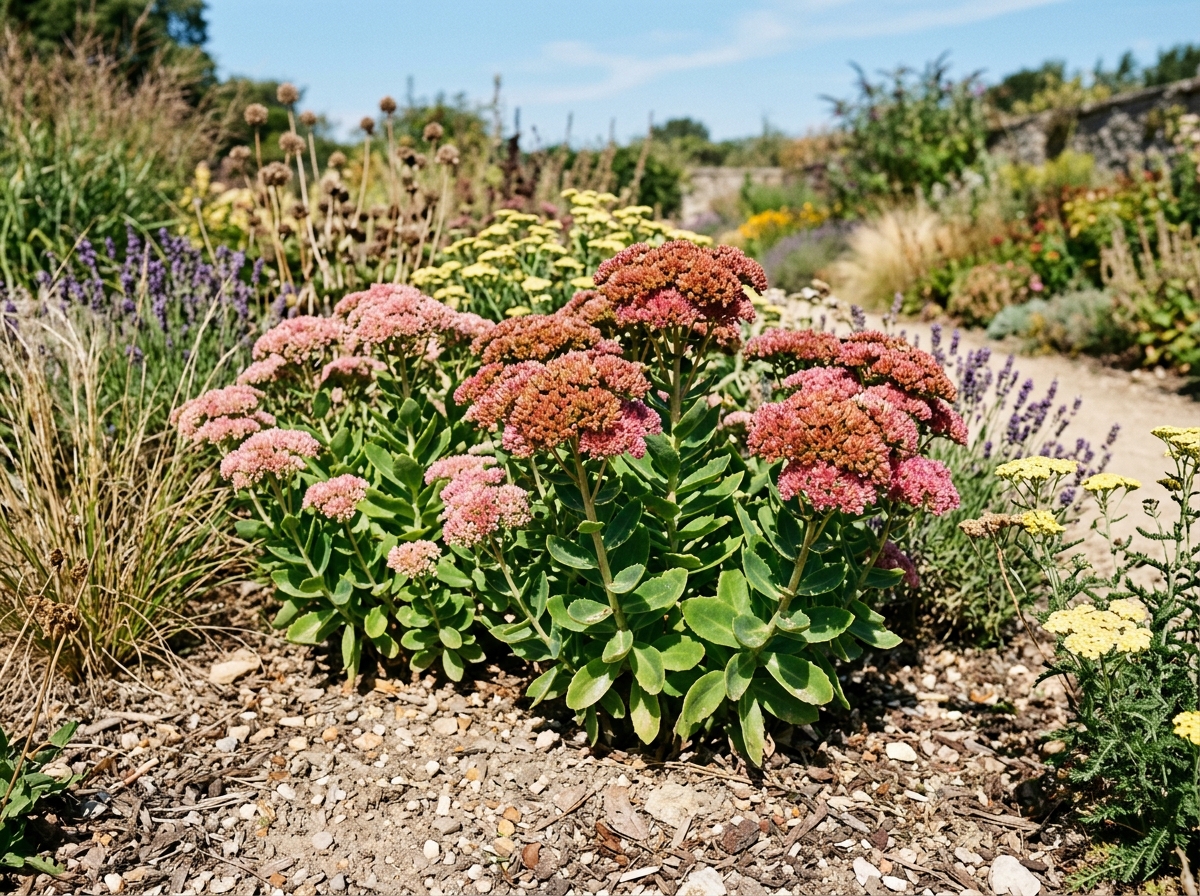
Sedums are the quintessential low-water succulent perennials for temperate climates. ‘Autumn Joy’ utilizes Crassulacean Acid Metabolism (CAM photosynthesis)—opening its leaf stomata only at night to absorb carbon dioxide while keeping them tightly sealed during blistering daytime heat to prevent evaporative moisture loss.
Growing Profile & Adaptations
USDA Zones 3–9. Extremely cold-hardy and drought-proof. Thrives in poor, rocky, or sandy soils in full sun. Compact fleshy foliage emerges in early spring, produces pale green broccoli-like buds in June, blooms rosy pink in August, and matures into deep rusty copper heads in autumn.
Landscape Companion Plants: Looks magnificent alongside Karl Foerster Feather Reed Grass, Blue Fescue, Aster novae-angliae, and Salvia ‘Caradonna’.
🌿 Horticulturist Pro-Tip: If grown in soil that is too rich or damp, Sedum stems can split and open up in the center. Give it lean, unamended soil and practice the ‘Chelsea Chop’ in late May (pinching stems back by one-third) to create a denser, sturdier dome.
#05. Black-Eyed Susan (Rudbeckia fulgida var. sullivantii ‘Goldsturm’)
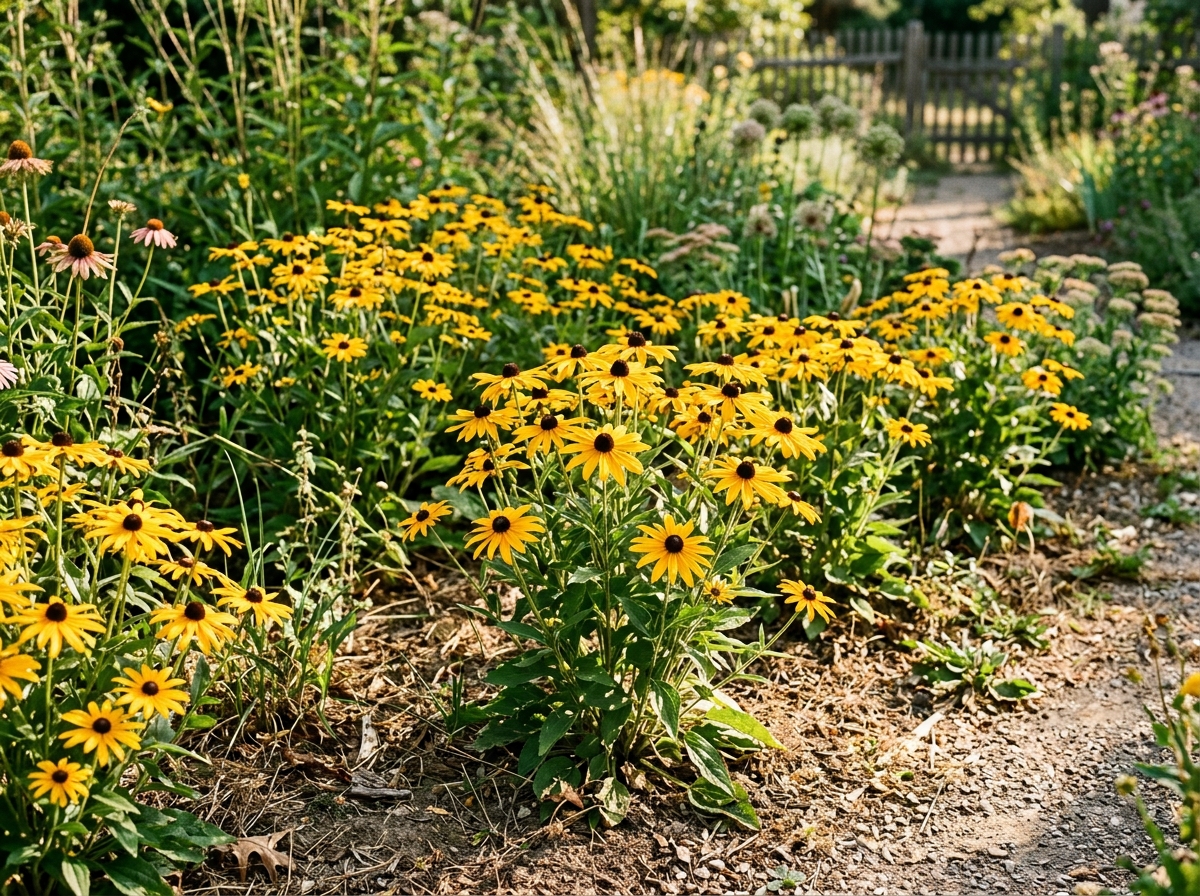
If you want non-stop, high-octane golden color from midsummer until hard autumn frost without turning on a hose, Rudbeckia ‘Goldsturm’ is peerless. This Perennial Plant of the Year winner forms dense clumps of rough, coarse-textured hirsute leaves that naturally minimize moisture loss and deter browsing herbivores.
Growing Profile & Adaptations
USDA Zones 3–9. Highly adaptable to clay, loam, or gravelly soils in full sun to light afternoon shade. Once its fibrous root system establishes during its first year, it weathers prolonged midsummer droughts without skipping a beat.
Landscape Companion Plants: Classic prairie companions include Russian Sage, Echinacea, Heliopsis, Agastache (Hummingbird Mint), and Monarda.
🌿 Horticulturist Pro-Tip: Deadhead spent flower blooms every two weeks during midsummer to stimulate continuous fresh bud formation, but leave the late-season black button cones for overwintering seed-eating songbirds.
#06. Moonshine Yarrow (Achillea ‘Moonshine’)
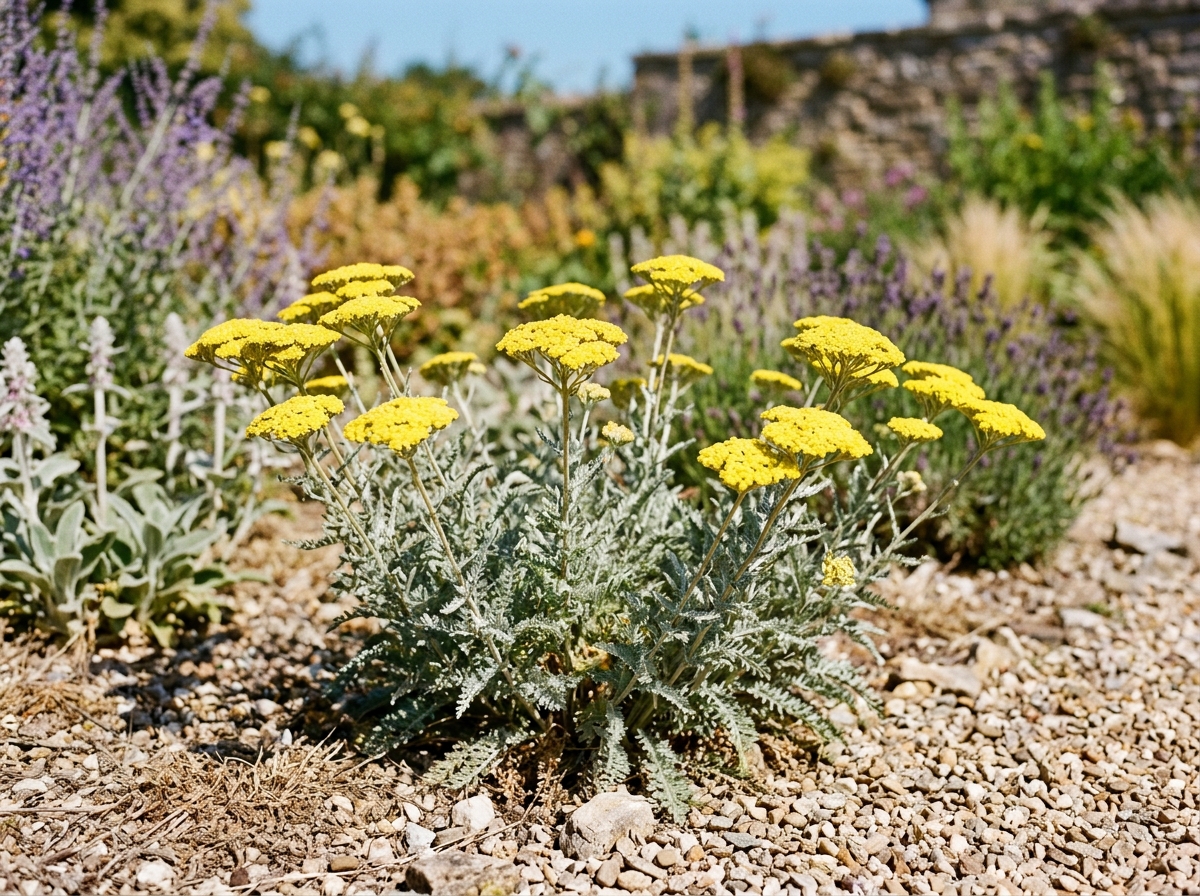
Yarrow has been revered for thousands of years as both a medicinal herb and an indestructible garden perennial. ‘Moonshine’ is an award-winning sterile hybrid that produces flat, 4-to-5 inch wide landing-pad flower umbels of luminous sulfur-yellow held above aromatic, deeply dissected silver-grey foliage.
Growing Profile & Adaptations
USDA Zones 3–8. Thrives in poor, dry, sandy, or gravelly soils under intense sun. High fertility and excessive watering cause yarrow to become leggy and flop over. Highly resistant to deer, rabbits, and drought.
Landscape Companion Plants: Forms striking architectural contrasts with spiky purple Salvia nemorosa, lavender, Penstemon, and blue fescue grass.
🌿 Horticulturist Pro-Tip: When the initial yellow flower heads fade to pale beige in midsummer, shear the entire plant back by half using hedge shears. It will flush out fresh silver foliage and a second wave of late-summer blooms within three weeks.
#07. Parry’s Agave (Agave parryi var. truncata)
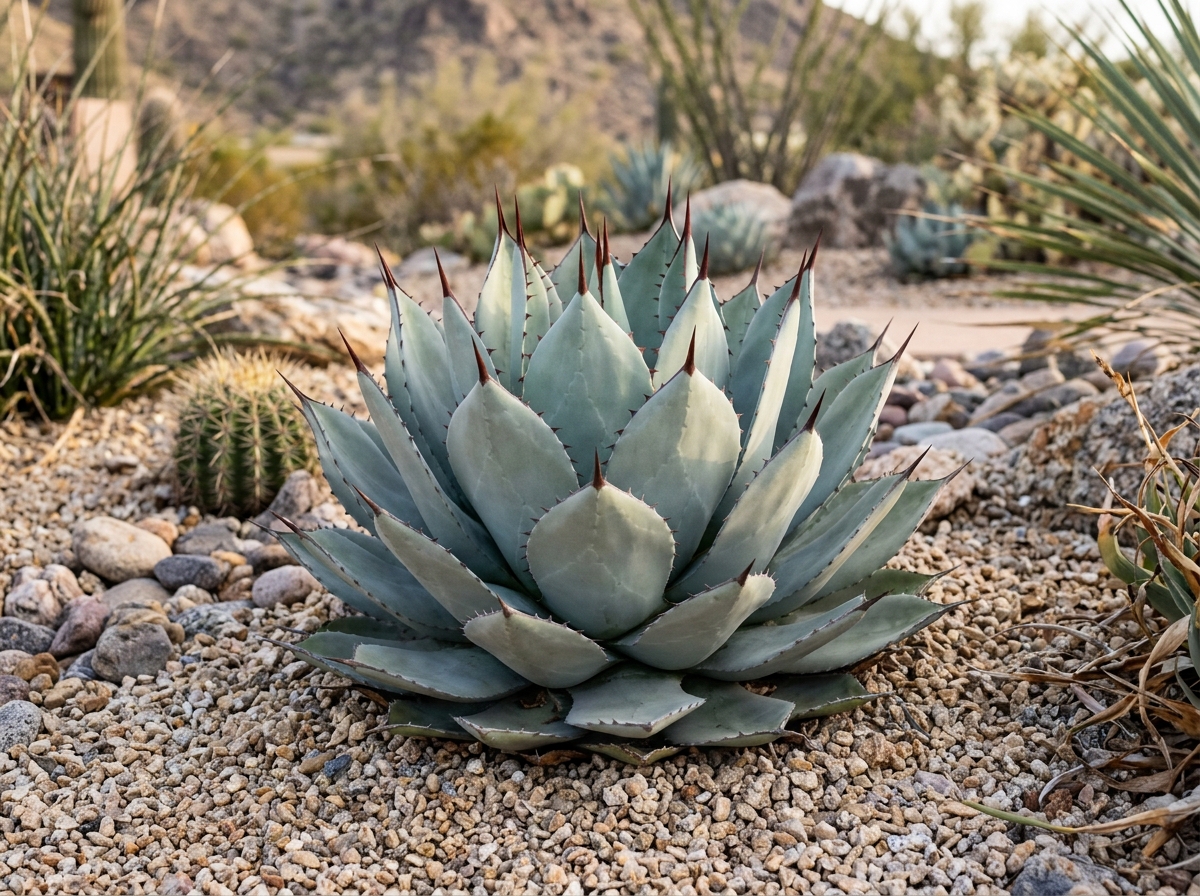
For unmistakable architectural drama in a drought-prone garden, Parry’s Agave is the ultimate evergreen living sculpture. Native to the high-elevation arid mountains of Arizona and northern Mexico, it forms a compact, perfectly symmetrical artichoke-shaped rosette of broad, powdery blue-grey succulent leaves armed with dark maroon teeth.
Growing Profile & Adaptations
USDA Zones 7–10 (one of the most cold-hardy agaves, tolerating winter lows down to 0°F / -18°C if kept completely dry). Demands razor-sharp gravelly drainage and full, unshaded sun. Needs virtually zero supplemental water once rooted.
Landscape Companion Plants: Surround with low creeping groundcovers like Creeping Thyme, Delosperma (Hardy Ice Plant), Blue Chalksticks, and desert grasses.
🌿 Horticulturist Pro-Tip: Plant agaves slightly elevated on a 3-to-4 inch raised mound of coarse grit or crushed rock. Elevating the root crown ensures water drains away instantly during cold winter rains, which is the key to overwintering agaves in marginal zones.
#08. Globe Thistle (Echinops ritro ‘Veitch\’s Blue’)
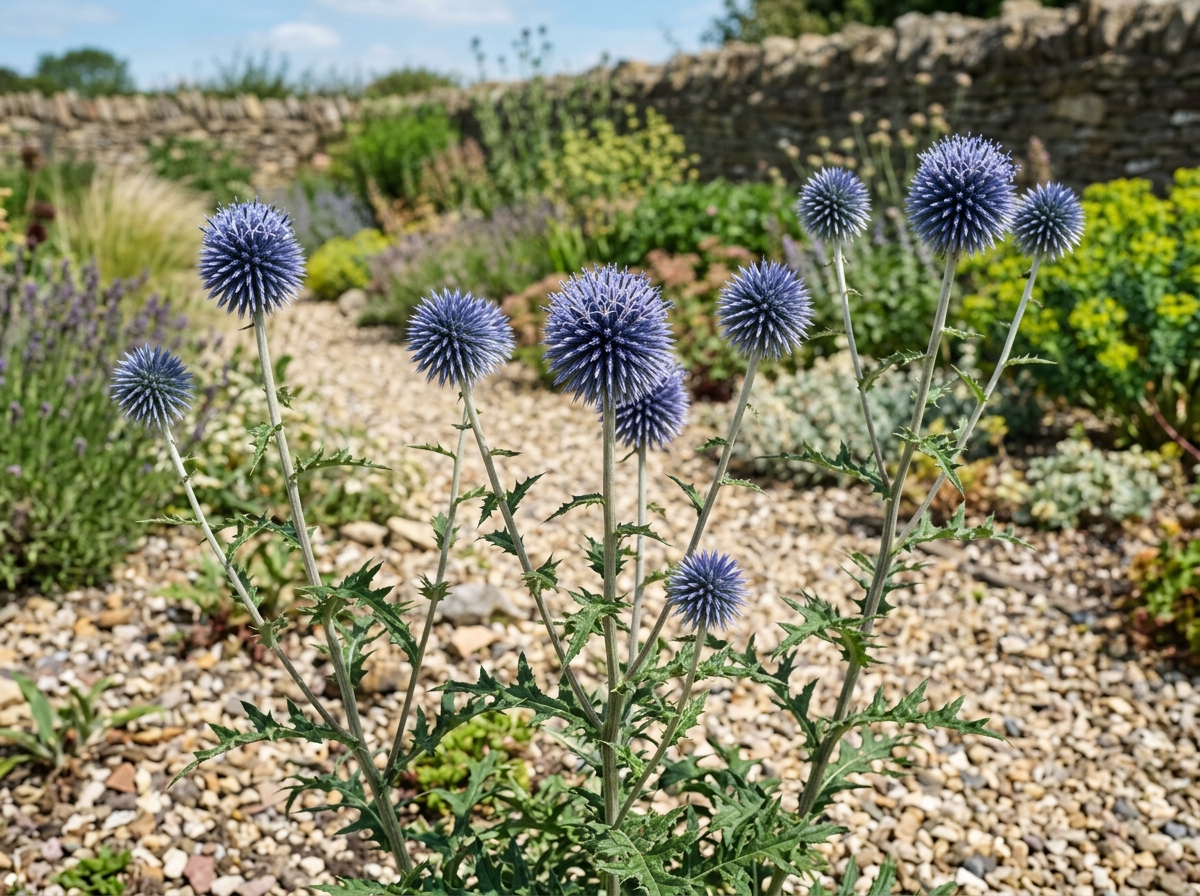
With its otherworldly geometric 2-inch spherical flower heads of metallic steel-blue, Globe Thistle injects immediate architectural intrigue into the dry border. Native to dry, rocky slopes from eastern Europe to central Asia, its coarse thistle-like leaves have white woolly undersides that reflect heat and preserve moisture.
Growing Profile & Adaptations
USDA Zones 3–9. Extremely drought-hardy and thrives in poor, rocky, sandy, or heavy clay soils that cause ordinary perennials to wither. Requires full sun for maximum bloom color and stem rigidity.
Landscape Companion Plants: Exceptional when planted behind flat yellow yarrow, orange Kniphofia (Red Hot Poker), and feathery Stipa grasses.
🌿 Horticulturist Pro-Tip: Cut the spherical steel-blue flower heads just as the tiny star-shaped florets begin to open on the top half of the ball. Hang them upside-down in a dark, airy room to create everlasting dried flower arrangements that maintain their brilliant blue hue for years.
#09. Blanket Flower (Gaillardia x grandiflora (‘Arizona Sun’ / ‘Spintop’))
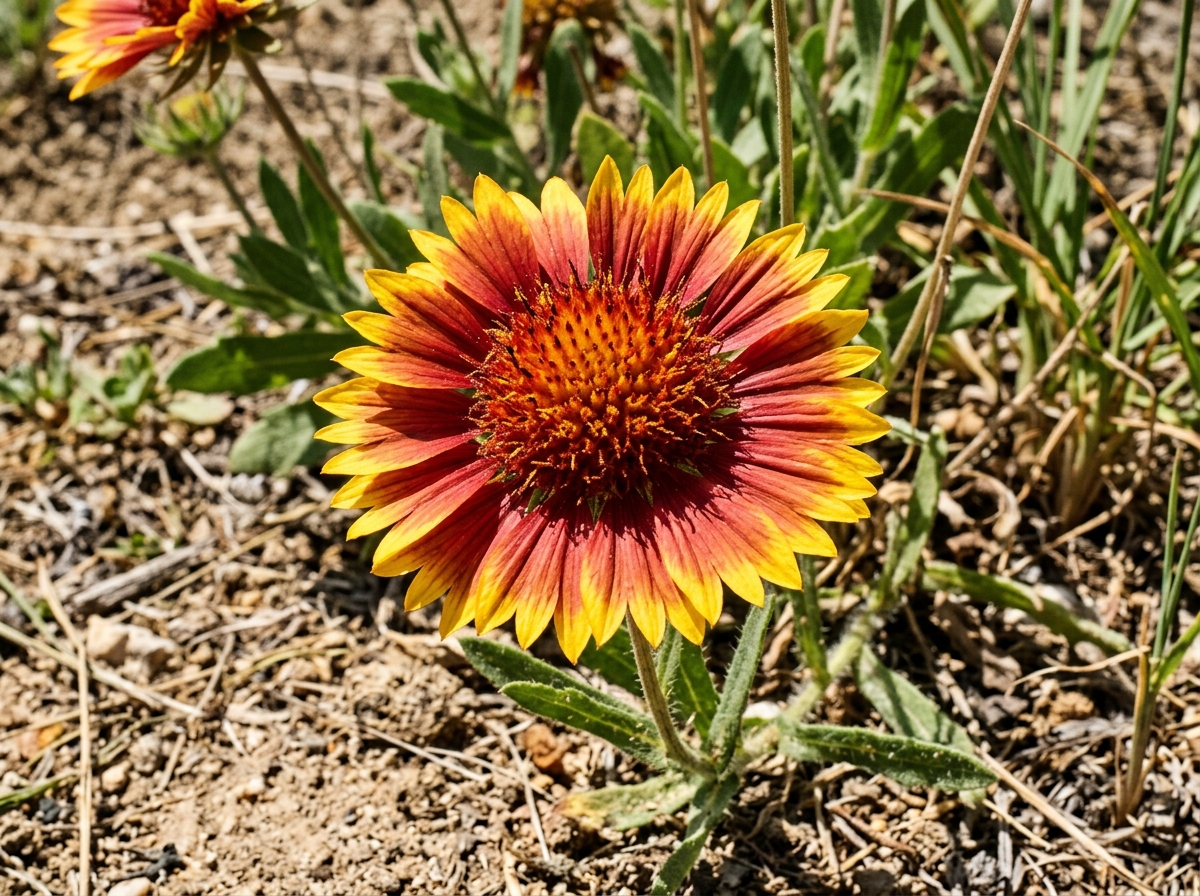
Named after the vibrant weaving patterns of traditional Native American blankets, Gaillardia is a sun-worshipping powerhouse native to the arid western plains. It produces a dizzying profusion of two-tone daisy-like blooms featuring fiery scarlet centers ringed with serrated canary-yellow tips that bloom relentlessly from June until hard frost.
Growing Profile & Adaptations
USDA Zones 3–10. Thrives in poor, sandy, loose soils with sharp drainage. Heavy clay and rich soils shorten its lifespan. Highly salt-tolerant and virtually immune to scorching ambient heat.
Landscape Companion Plants: Pairs brilliantly with Coreopsis, Salvia greggii (Autumn Sage), Lavender Cotton (Santolina), and Verbena.
🌿 Horticulturist Pro-Tip: Do not pamper Gaillardia with rich compost or heavy fertilizers; nutrient overload leads to floppy foliage and root crown rot. Lean, neglected, sandy soils produce the most compact, floriferous mounds.
#10. Red Yucca (Hesperaloe parviflora)
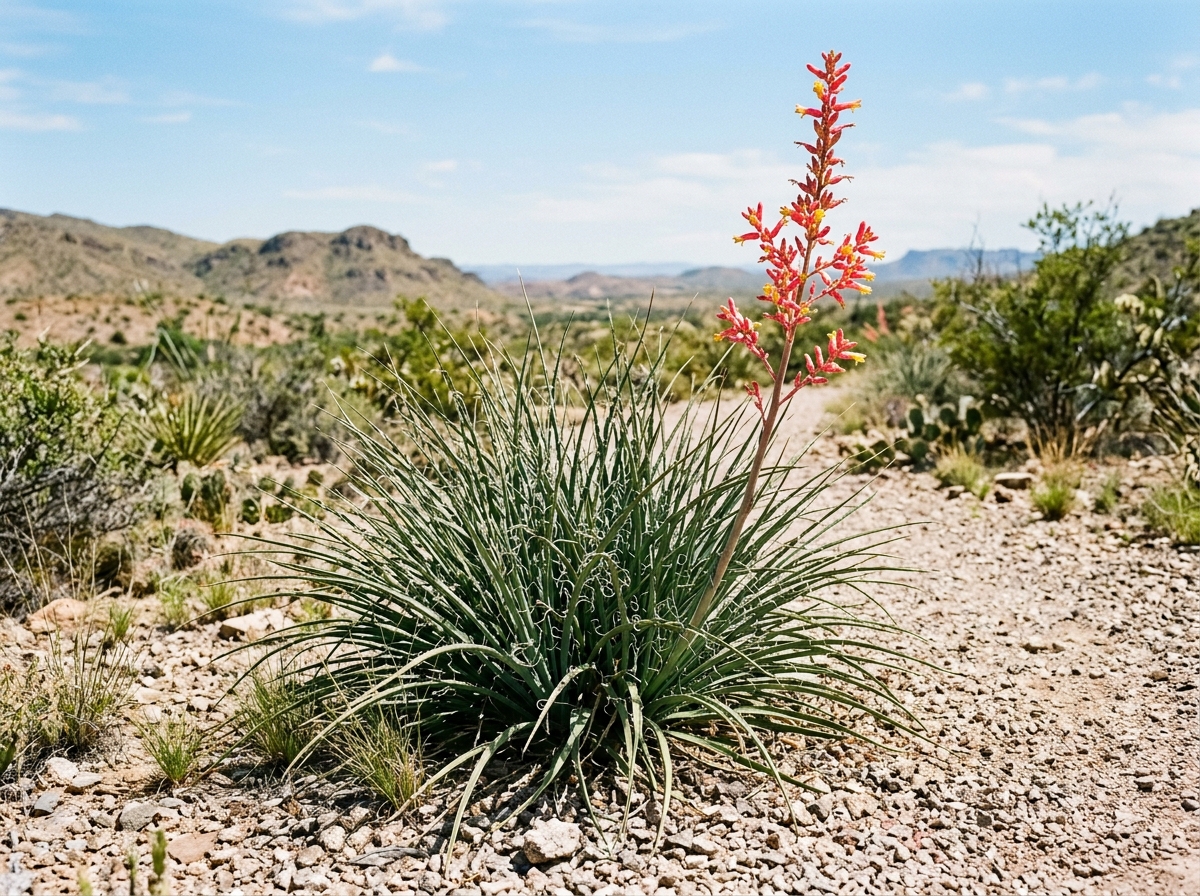
Despite its common name, Red Yucca is actually a member of the century plant family rather than a true yucca. It forms a graceful 3-foot evergreen fountain of spineless, arching blue-green needle-like leaves with delicate curling white threads peeling along the margins. From May to October, it sends up arching 5-foot flower wands laden with coral-pink and yellow tubular bells.
Growing Profile & Adaptations
USDA Zones 5–10 (cold hardy down to -20°F / -29°C). Tolerates brutal radiant heat from pavement, reflective brick walls, and baking desert sun. Requires sharply draining soil and zero summer irrigation once rooted.
Landscape Companion Plants: Hummingbird magnet! Plant alongside Desert Spoon (Dasylirion), Blackfoot Daisy, Texas Sage (Leucophyllum), and Agave.
🌿 Horticulturist Pro-Tip: Red Yucca is completely spineless, making it the safest architectural desert succulent to plant near high-traffic patio walkways, swimming pools, and areas where children and pets play.
5 Golden Rules for Successful Xeriscaping
Transforming your garden into an effortless, drought-resilient sanctuary hinges on these five fundamental horticultural practices:
1. Remember the ‘Establishment Year’ Golden Rule
A widespread beginner myth is that drought-tolerant plants require zero water from the day they are planted. Even desert natives like Agave, Lavender, and Russian Sage require consistent weekly watering during their first 6 to 12 months. Only after their taproots and lateral roots anchor deep into the native subsoil do they develop their legendary water-independence.
2. Prioritize Sharp Mineral Drainage Over Rich Loam
More drought-tolerant plants are killed by wet feet in winter than by heat in summer. If your yard has heavy, suffocating clay, do not merely dig a hole and fill it with peat moss (which creates a water-trapping underground bathtub). Amend native soil broadly with 40% to 50% coarse horticultural grit, crushed volcanic pumice, or pea gravel, or build elevated raised berms.
3. Switch to Inorganic Gravel Mulch for Arid Perennials
While vegetable gardens love 3 inches of moisture-retentive shredded bark mulch, Mediterranean subshrubs and succulents despise it. Wood mulch traps moisture against plant crowns and encourages fungal collar rot. Replace wood chips with a 2-inch layer of crushed decomposed granite, pea stone, or limestone gravel. Gravel reflects solar warmth, suppresses weeds, and keeps the root crown bone-dry.
4. Practice ‘Hydrozoning’ in Your Landscape Design
Never plant a thirsty hydrangea or hosta right next to a lavender or Russian sage. Group plants into distinct ‘hydrozones’ based on their precise watering requirements: Zone 1 (High Water: Lawn & Vegetables), Zone 2 (Moderate Water: Fruit trees & Roses), and Zone 3 (Xeriscape: Lavender, Sedum, Coneflower, Agave). This ensures no plant is overwatered or parched.
5. Adopt the ‘Deep & Infrequent’ Irrigation Rhythm
Shallow, daily 5-minute sprinklings encourage weak, surface-level roots that bake and shrivel under midsummer sun. Train your low-water perennials to become self-reliant: deliver a slow, deep soaking (1 to 2 gallons per plant) once every two to three weeks during dry spells. Deep watering encourages roots to plunge several feet downward into cool, moisture-retentive subsoil.
Frequently Asked Questions
How often do you water drought-tolerant plants once established?
Once their root systems establish after the first full growing season, most drought-tolerant perennials (like Russian Sage, Yarrow, and Sedum) only require supplemental watering once every 3 to 4 weeks during extreme heatwaves with zero rainfall. True desert natives like Agave and Red Yucca survive comfortably on natural rainfall alone.
What are the best low-water flowering perennials for continuous summer blooms?
The top long-blooming low-water champions are Purple Coneflowers (Echinacea), Black-Eyed Susans (Rudbeckia ‘Goldsturm’), Blanket Flower (Gaillardia), and Russian Sage (Salvia yangii). If deadheaded occasionally, these four perennials will produce non-stop floral color for 12 to 16 consecutive weeks from June through October.
Can drought-tolerant plants survive cold freezing winters?
Yes! All ten plants featured in this guide (including Purple Coneflower, Sedum Autumn Joy, Globe Thistle, and Yarrow) are hardy down to USDA Zone 3 or 4, withstanding winter temperatures well below -20°F (-29°C). The secret to winter survival for arid plants is razor-sharp soil drainage; dry roots easily survive freezing cold, while waterlogged roots rot.
What kind of mulch is best for a drought-prone garden?
For Mediterranean herbs (lavender, thyme), succulents (agave, sedum), and rockery perennials, inorganic mineral mulch like crushed granite, pea gravel, or volcanic rock is vastly superior to wood mulch. Gravel reflects heat into the foliage, prevents root-collar rot, suppresses weeds, and never decomposes or blows away in high winds.
How do you prepare heavy clay soil for low-water plants?
Heavy clay holds water too tightly for arid plants. Rather than tilling sand into clay (which creates concrete-like compaction), build raised planting mounds or berms 6 to 10 inches above the native soil level. Fill the mounds with a free-draining blend of 50% native soil, 30% coarse granite grit or pumice, and 20% well-aged compost.
Create a Climate-Ready Living Landscape
Planting a low-water garden isn’t just about saving money on your water bill—it’s about partnering with plants that naturally celebrate hot sun, dry gravel, and seasonal rhythms. Choose three or four of these proven performers today, mulch with crushed gravel, and enjoy an abundance of color and pollinators with a fraction of the effort.


0 Comments