

When horizontal square footage is limited, the only way to expand your garden is upward.
A modest townhouse courtyard, a narrow side alley, or a postage-stamp suburban backyard doesn’t mean you have to sacrifice lush greenery, fresh kitchen herbs, or homegrown produce. By utilizing vertical surfaces—fences, bare masonry walls, trellises, and freestanding modular towers—you multiply your planting surface area by 300% to 500% without sacrificing a single square inch of precious patio seating space. Here are 15 battle-tested, visually stunning vertical garden ideas tailored specifically for small yards.
Whether you’re looking to hide an unsightly fence, harvest fresh herbs right outside your kitchen window, or create a tranquil green privacy screen, here are 15 ingenious vertical garden ideas for small yards with detailed mounting instructions and plant pairings.
Vertical Garden Design Matrix at a Glance
| Vertical Structure & Idea | Ground Footprint | Best Matched Plants | DIY Difficulty | Ideal Yard Location |
|---|---|---|---|---|
| #01 Modular Cedar Slat Privacy Wall | Zero (Wall Mounted) | Trailing Ivy, Scarlet Geraniums, Rosemary, Alyssum | Intermediate | Backyard boundary fence or patio perimeter |
| #02 Living Geotextile Felt Pocket Wall | Zero (Wall Mounted) | Boston Ferns, Heuchera (Coral Bells), Creeping Jenny, Campanula | Beginner to Intermediate | Courtyard brick walls, partial-shade nooks |
| #03 A-Frame Timber & Copper Ladder Shelf | Compact (3 x 1.5 ft) | Culinary Herbs (Mint, Basil, Parsley), Alpine Strawberries | Easy (Freestanding) | Flagstone patio corners, sunny deck edge |
| #04 Galvanized Cattle Panel Garden Arch Tunnel | Walkway Overhead (4 ft wide) | Climbing Runner Beans, Sweet Autumn Clematis, Mini Cucumbers | Intermediate | Spanning between two raised beds or garden path |
| #05 Upcycled Wooden Pallet Herb Planter | Ultra-Slim (4 x 1 ft) | Italian Basil, Golden Oregano, Curled Parsley, Trailing Thyme | Easy DIY | Leaning against garden shed or garage wall |
| #06 Classic Wooden Pyramid Obelisk Trellis | Compact (2 x 2 ft base) | Sweet Peas (Lathyrus), Purple Clematis, Black-Eyed Susan Vine | Beginner (Pre-built or DIY) | Lawn corners, centerpiece in small flower borders |
| #07 Stacked Terracotta Pot Tower (Topsy-Turvy) | 1.5 x 1.5 ft | Calibrachoa (Million Bells), Petunias, Trailing Nasturtiums | Easy DIY | Patio entryway, edge of stone terrace |
| #08 Hanging Shoe Organizer Salad Wall | Zero (Fence Mounted) | Looseleaf Lettuce, Baby Spinach, Arugula, Cherry Radishes | Beginner ($15 budget) | Wooden privacy fences in full or part sun |
| #09 Espaliered Fruit Tree Wall | Narrow 1-ft Root Zone | Dwarf Apples (Honeycrisp/Gala), Pears, Fig Trees | Advanced Pruning | Warm, sunny brick or stone boundary walls |
| #10 Tiered Hanging Rain Gutter Garden | Zero (Cable Suspended) | Everbearing Strawberries, Butterhead Lettuce, Chives | Intermediate | Sunny fence panels, exterior garage siding |
| #11 Woven Willow Screen with Conical Baskets | Narrow (6 inches deep) | Trailing Fuchsias, Silver Dichondra, Royal Blue Lobelia | Easy | Secluded garden bench backdrop, shady side yards |
| #12 Barnwood Mason Jar Succulent Sconces | Zero (Wall Accent) | Echeveria, Haworthia, String of Pearls, Burro’s Tail | Easy Craft | Sheltered outdoor living room or covered porch |
| #13 Vertical Aeroponic Garden Tower Column | 2.5 ft diameter circle | Tuscan Lacinato Kale, Red Oakleaf Lettuce, Cilantro, Strawberries | Plug-and-Play Tech | Sun-drenched paved patio or balcony corner |
| #14 Pergola Corner Pillar Climber | 1 x 1 ft post base | Star Jasmine (Trachelospermum), Climbing Hydrangea, Clematis | Beginner | Pergola, gazebo, or porch support posts |
| #15 Repurposed Victorian Iron Gate Trellis | Zero (Wall Mounted) | Morning Glories, Climbing English Roses, Honeysuckle | Easy to Moderate | Narrow passageways, blank stucco or brick walls |
#01. The Modular Cedar Slat Privacy Wall
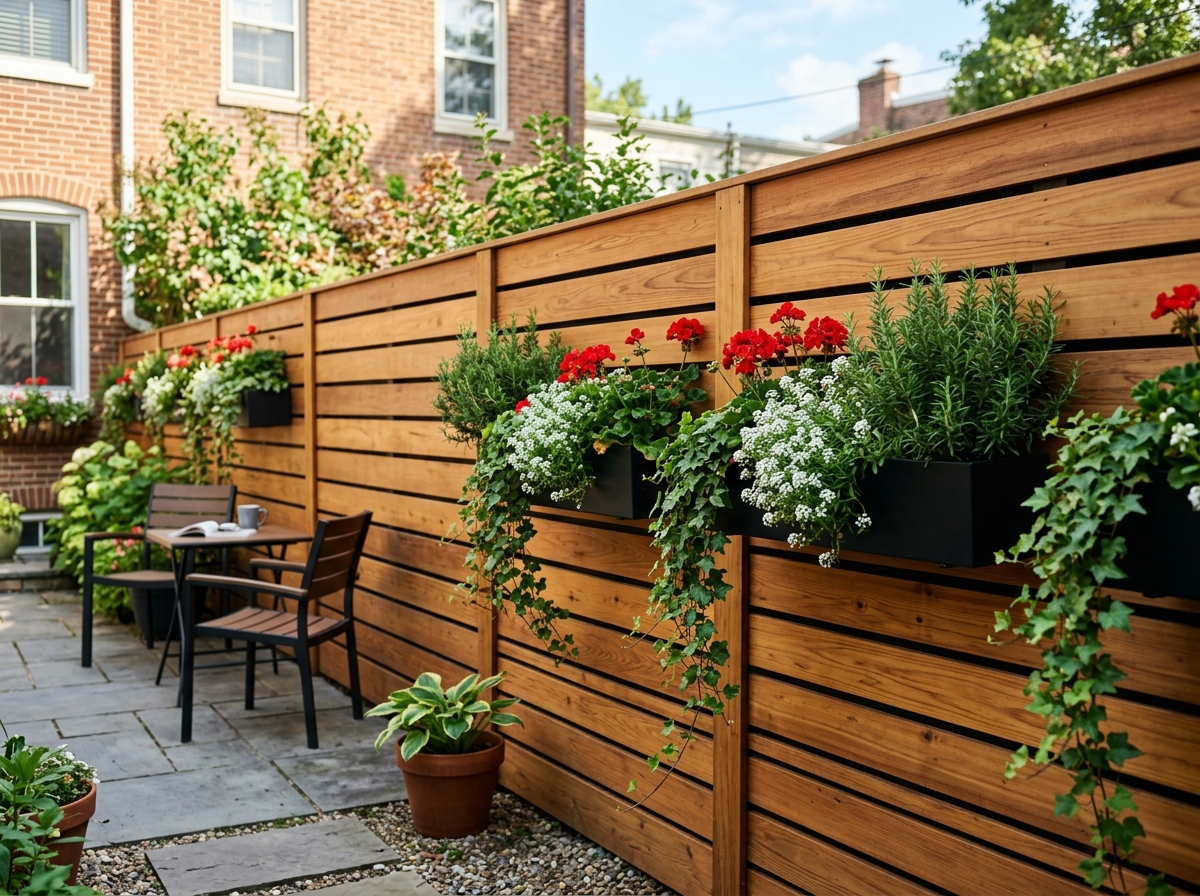
Horizontal cedar slat screens are a staple of modern architectural landscaping, providing crisp privacy while visually widening compact yards. By mounting modular powder-coated steel or wooden planter boxes directly to the slats using heavy-duty French cleats, you transform a plain boundary fence into a living three-dimensional acoustic and visual barrier.
Recommended Plant Palette
- Trailing English Ivy (Hedera helix)
- Zonal Scarlet Geraniums (Pelargonium)
- Sweet White Alyssum (Lobularia maritima)
- Upright Tuscan Rosemary (Salvia rosmarinus)
- Trailing Creeping Jenny (Lysimachia nummularia)
Mounting, Hardware & Construction
Use rot-resistant western red cedar 1×2 or 1×3 boards spaced 1/2-inch apart on 4×4 pressure-treated posts anchored in concrete. Secure planter boxes using stainless steel exterior wood screws into structural backing. Always drill 1/2-inch drainage holes in the base of each box and line with geotextile fabric.
Irrigation & Maintenance: Ensure boxes are filled with a featherweight potting mix (60% peat/coir, 20% compost, 20% perlite). Run a discreet 1/4-inch black drip irrigation supply line tucked behind the vertical post up to individual 0.5 GPH pressure-compensating emitters in each planter.
🌿 Horticulturist Pro-Tip: Because cedar slats allow wind to pass through, planters dry out faster than in-ground beds. Pair upright structural herbs with trailing spillovers to shade the soil surface and reduce root zone evaporation by up to 35%.
#02. The Living Geotextile Felt Pocket Wall
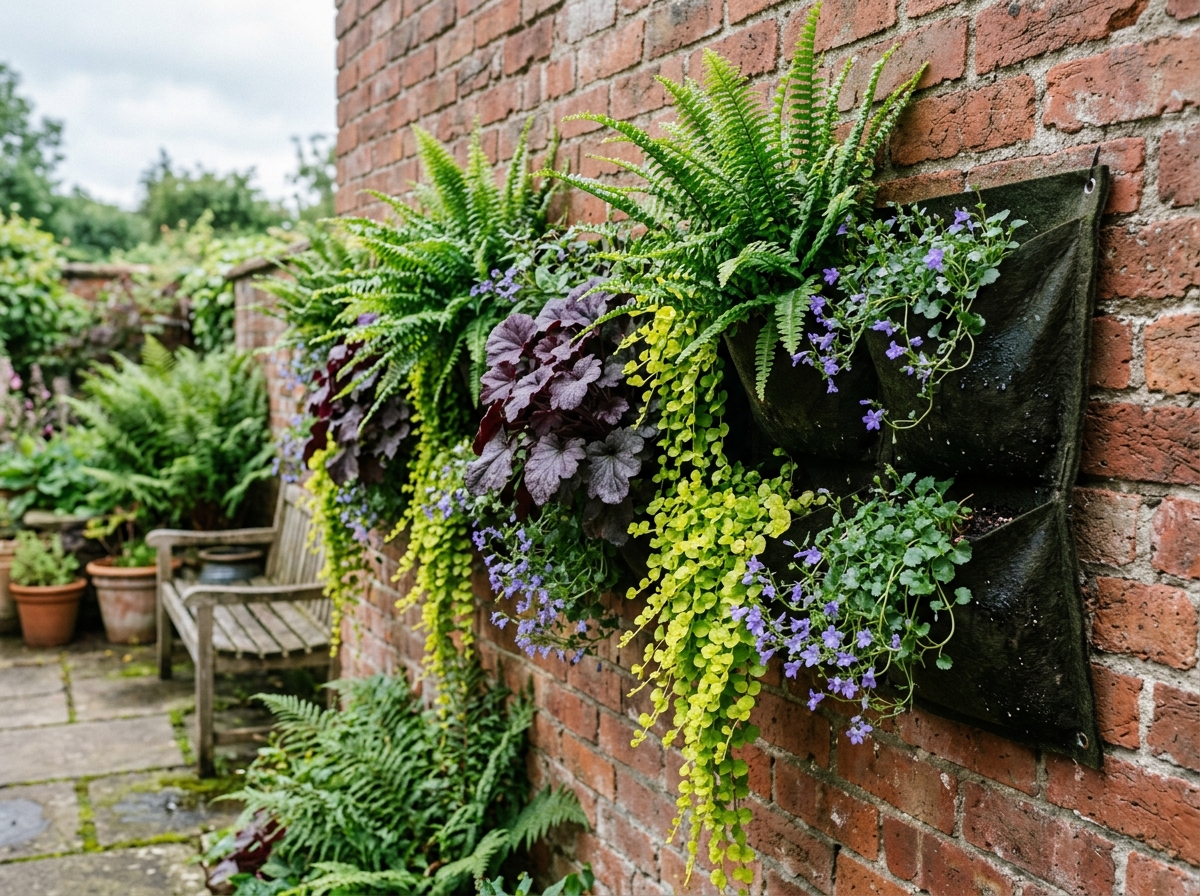
Pioneered by French botanist Patrick Blanc, living geotextile walls allow hundreds of plants to thrive vertically without heavy soil weight. Breathable industrial felt pockets allow air pruning of roots, preventing plants from becoming root-bound while creating a dense, seamless floral tapestry that muffles city noise.
Recommended Plant Palette
- Boston Fern (Nephrolepis exaltata)
- Purple Coral Bells (Heuchera ‘Palace Purple’)
- Golden Creeping Jenny (Lysimachia nummularia ‘Aurea’)
- Trailing Blue Campanula (Campanula poscharskyana)
- Japanese Forest Grass (Hakonechloa macra)
Mounting, Hardware & Construction
Never mount felt pockets directly to drywall or bare wood. Fasten a 1/2-inch marine-grade plywood or recycled plastic backing sheet to your brick or fence with 1-inch spacers to ensure an open air gap. Screw the grommeted felt panel into the backing board.
Irrigation & Maintenance: Ideal for north or east-facing walls receiving gentle morning light or dappled shade. Geotextile pockets wick moisture laterally; install a top irrigation manifold that slowly drips water across the top tier, trickling downward through every lower pocket.
🌿 Horticulturist Pro-Tip: Always plant your most drought-tolerant specimens (like Heuchera) in the top pockets where air circulation is highest, and moisture-loving ferns and mosses in the bottom tiers where gravity naturally concentrates water runoff.
#03. The A-Frame Timber & Copper Ladder Shelf
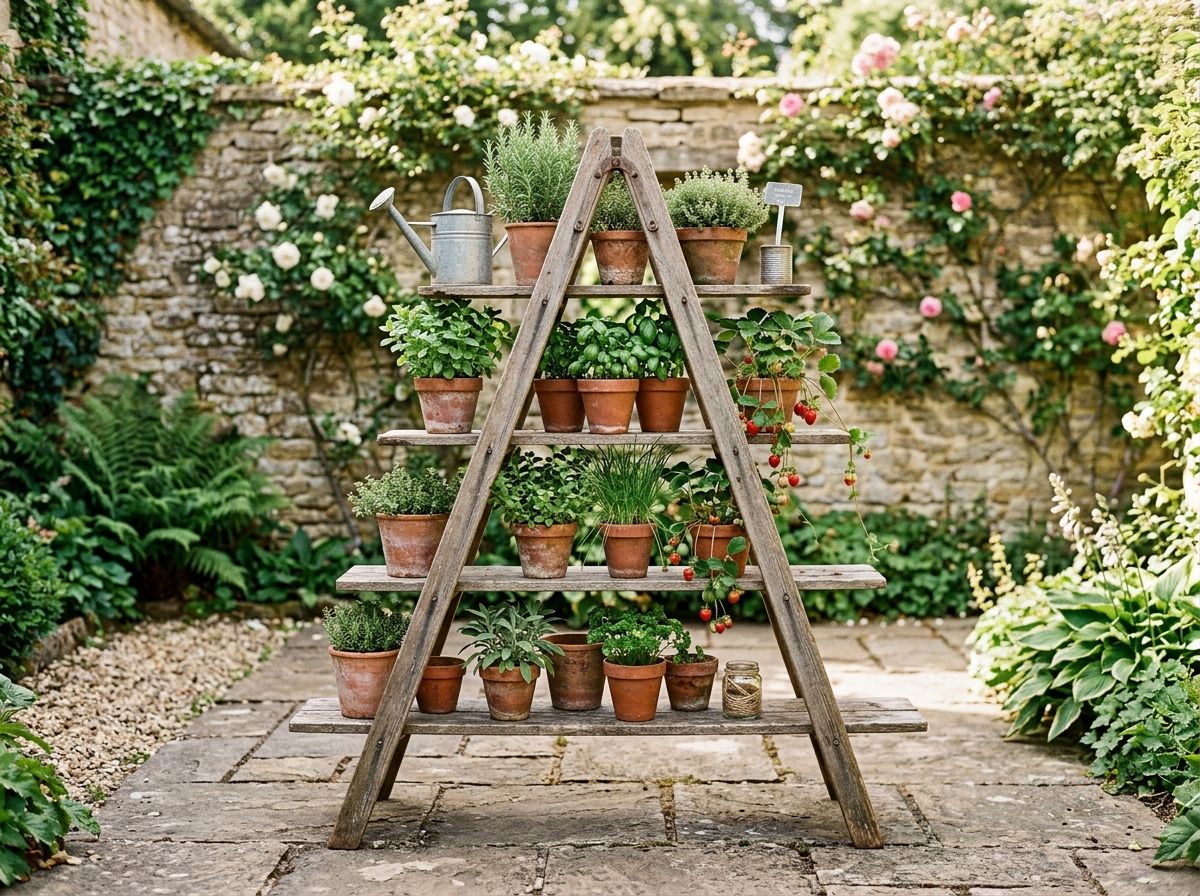
If you rent your home or don’t want to drill permanent holes into exterior walls, an A-frame ladder shelf is the premier freestanding vertical solution. Stepped horizontal tiers ensure that plants on lower shelves receive uninhibited sunshine, while the vertical footprint takes up less than 4 square feet of patio flooring.
Recommended Plant Palette
- Spearmint & Peppermint (Mentha spicata in contained pots)
- Genovese Sweet Basil (Ocimum basilicum)
- Flat-Leaf Italian Parsley (Petroselinum crispum)
- Alpine Everbearing Strawberries (Fragaria vesca)
- French Thyme (Thymus vulgaris)
Mounting, Hardware & Construction
Constructed from reclaimed scaffold boards or 2×6 cedar with copper pipe rung supports. Apply two coats of exterior penetrating tung oil or marine spar varnish to seal the wood. Position on level stone pavers or brick terrace.
Irrigation & Maintenance: Terracotta pots are porous, promoting superb root aeration and preventing root rot. Water potted herbs in the morning until water trickles into the saucer below. In winter, simply move the entire ladder or individual pots into a sheltered garage or greenhouse.
🌿 Horticulturist Pro-Tip: Culinary mint is notoriously invasive when planted in the ground, quickly taking over entire flower beds. Planting spearmint and peppermint in dedicated terracotta pots on a ladder shelf lets you enjoy boundless fresh mojito mint with zero risk of aggressive spread.
#04. The Galvanized Cattle Panel Garden Arch Tunnel
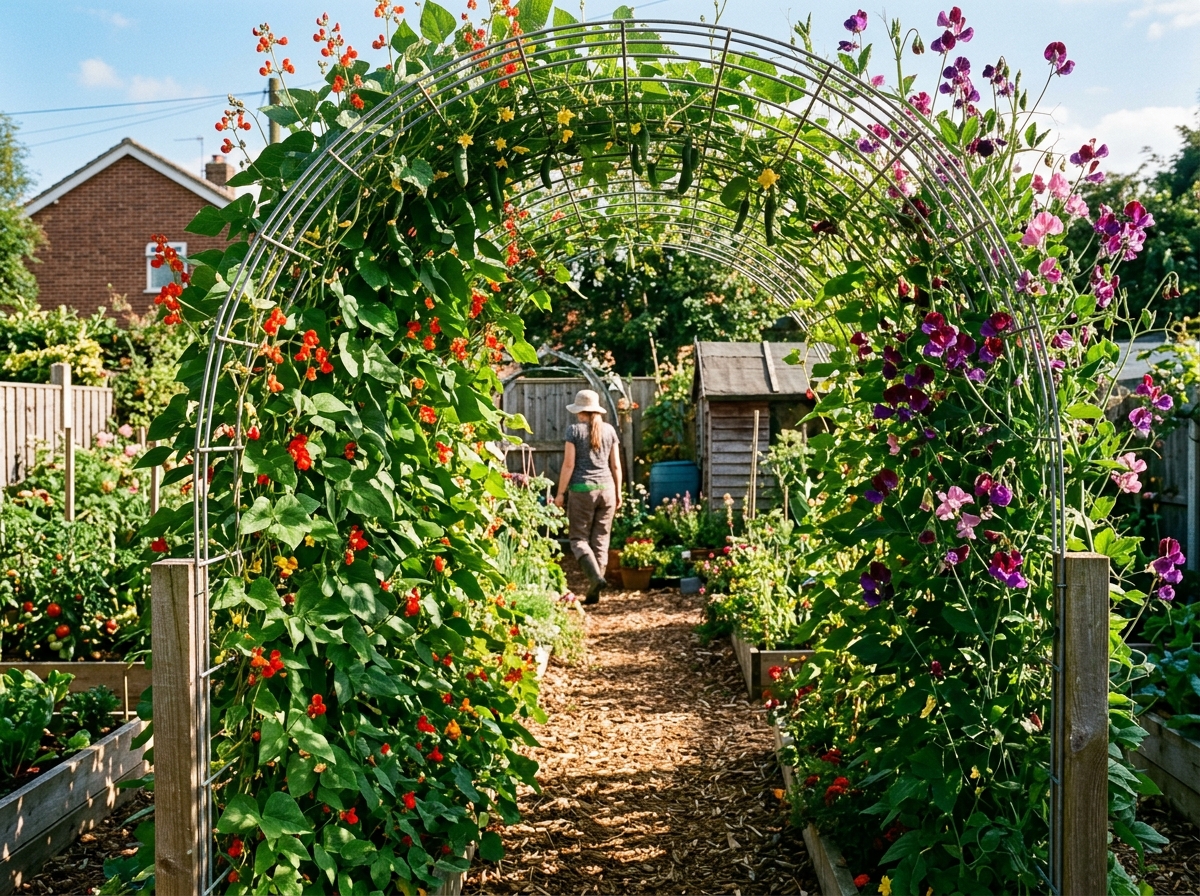
A 16-foot 4-gauge galvanized cattle panel arched over a garden walkway creates an enchanting floral or vegetable tunnel. By training climbing vining crops up and over your head, you harvest hanging cucumbers and runner beans at eye level while leaving the soil beneath completely open for shade-tolerant greens.
Recommended Plant Palette
- Scarlet Runner Beans (Phaseolus coccineus)
- Sweet Autumn Clematis (Clematis terniflora)
- Lemon Cucumbers / Armenian Cucumbers (Cucumis sativus)
- Sweet Peas (Lathyrus odoratus)
- Black-Eyed Susan Vine (Thunbergia alata)
Mounting, Hardware & Construction
Drive four 6-foot heavy-duty metal T-posts into the ground (two on each side of a 4-foot wide path). Bend the flexible 16×4-foot cattle panel into a majestic 7-foot high Roman arch, securing the wire ends against the T-posts with heavy-duty galvanized wire ties.
Irrigation & Maintenance: Full sun location. Plant climbing seeds or transplants along the bottom outer base. Train young vine tendrils around the 4-inch square wire grid for the first two weeks; after that, the plants will self-climb vigorously.
🌿 Horticulturist Pro-Tip: Harvesting runner beans and cucumbers from an overhead arch eliminates soil-borne pests, keeps fruits perfectly straight and spotless, and prevents powdery mildew by maximizing 360-degree wind ventilation.
#05. The Upcycled Wooden Pallet Herb Garden
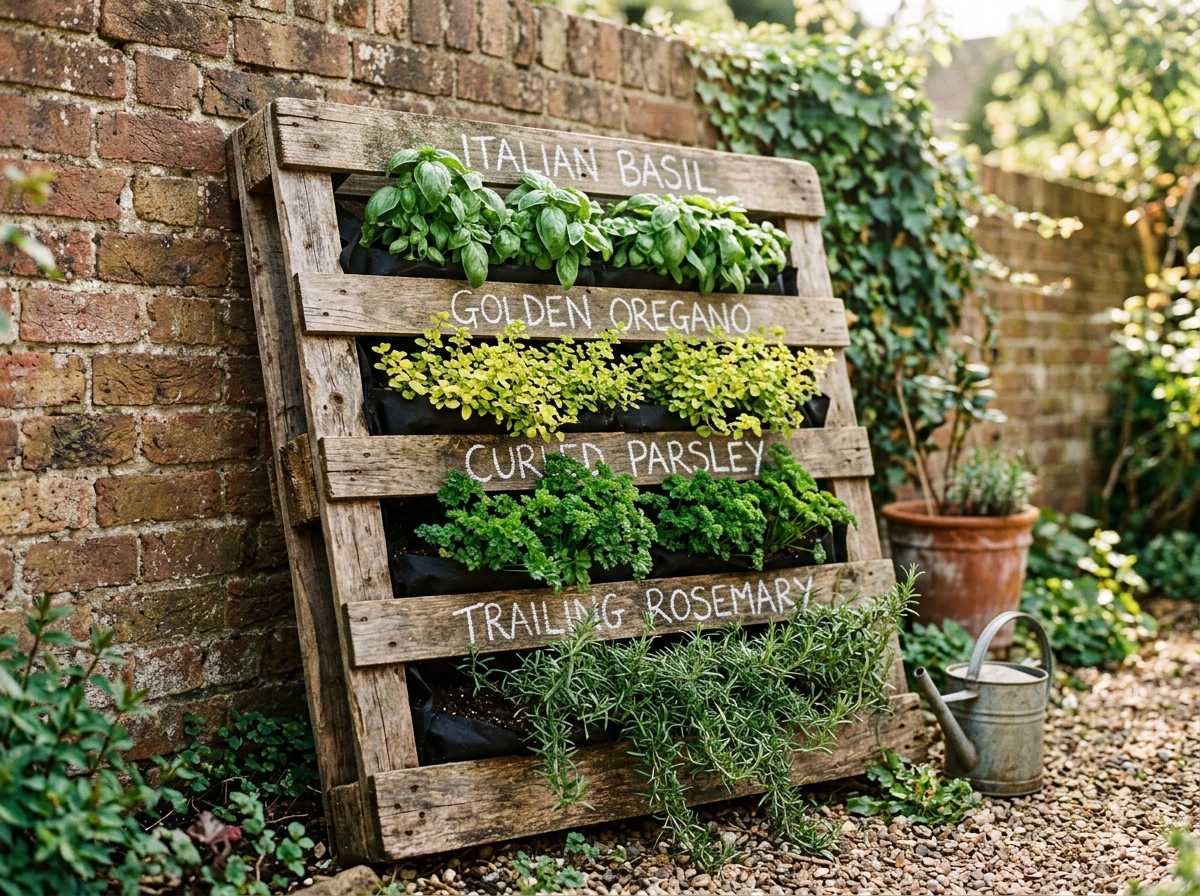
The wooden shipping pallet vertical garden is an iconic DIY classic for budget-conscious urban gardeners. A standard heat-treated wooden pallet converts effortlessly into four to five horizontal planting troughs, providing an instant multi-tiered culinary herb station right outside the kitchen door.
Recommended Plant Palette
- Italian Large Leaf Basil
- Golden Greek Oregano (Origanum vulgare)
- Curled Leaf Parsley
- Trailing Creeping Thyme
- Prostrate Rosemary
Mounting, Hardware & Construction
Only use pallets branded with the ‘HT’ stamp (Heat Treated; avoid toxic chemical ‘MB’ pallets). Sand rough splinters. Staple heavy-duty landscape weed fabric inside the bottom and sides of each slat to create secure planting troughs. Lean securely at a 15-degree angle or anchor to wall studs with L-brackets.
Irrigation & Maintenance: Fill each trough with a lightweight blend of rich potting soil and perlite. Because soil volume in pallet troughs is shallow (4–6 inches), water daily in hot weather or install a micro-soaker hose along each tier.
🌿 Horticulturist Pro-Tip: Use white waterproof chalk or chalkboard paint on the front horizontal wooden slats to write herb names and flavor notes. It adds charming rustic visual character while keeping your kitchen culinary harvest organized.
#06. The Classic Wooden Pyramid Obelisk Trellis
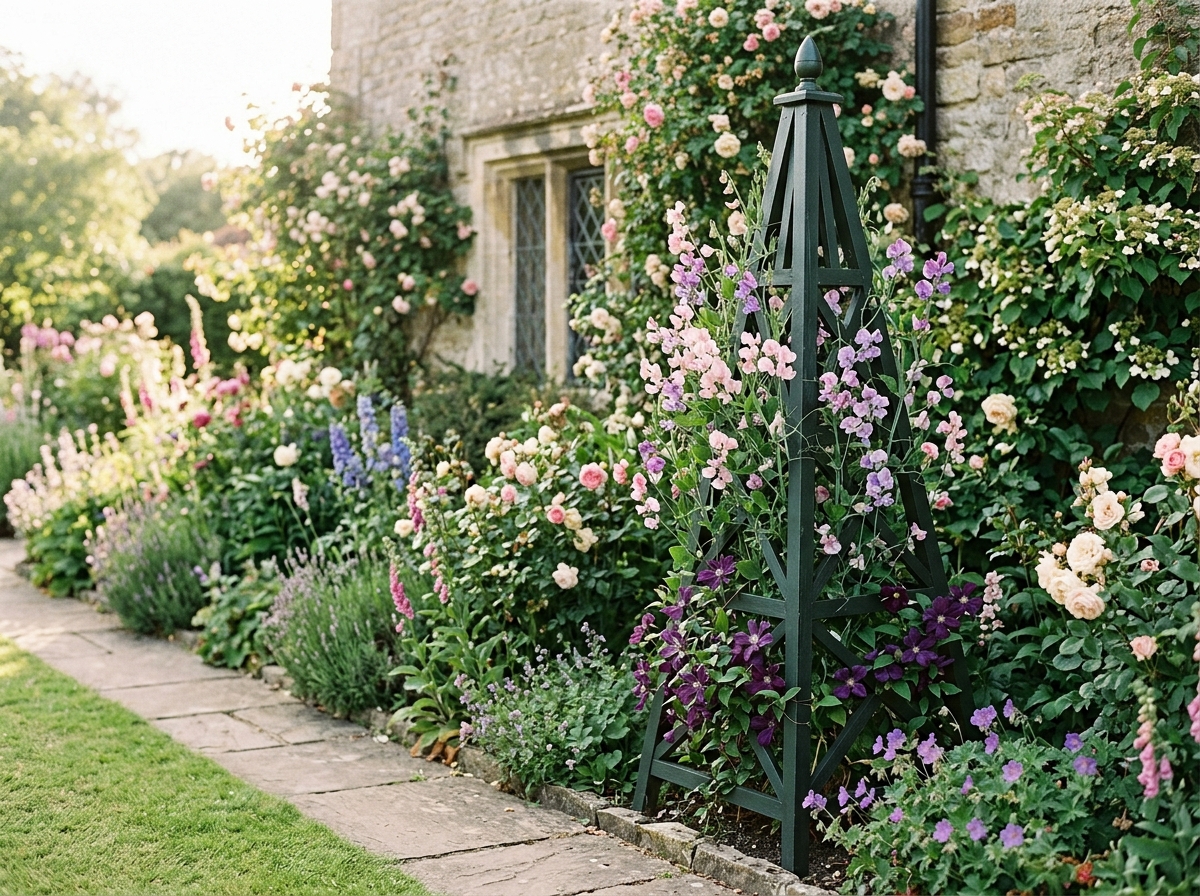
In formal French and English cottage gardens, wooden pyramid tuteur obelisks provide essential architectural height in flat yards. Standing 6 to 8 feet tall on a compact 2×2-foot base, an obelisk acts as a sculptural garden focal point while training vigorous flowering vines upward into the sunlight.
Recommended Plant Palette
- Sweet-Scented Sweet Peas (Lathyrus odoratus ‘Cupani’)
- Jackmanii Purple Clematis (Clematis ‘Jackmanii’)
- Climbing Miniature Roses (‘Jeanne Lajoie’)
- Morning Glory (‘Heavenly Blue’)
- Cup and Saucer Vine (Cobaea scandens)
Mounting, Hardware & Construction
Constructed from cedar, redwood, or painted pine with a decorative turned wooden finial on top. Anchor the four wooden legs 4 to 6 inches into the garden bed soil, or screw them to metal ground stakes to prevent high winds from toppling the structure.
Irrigation & Maintenance: Clematis plants require ‘cool roots and warm heads’—plant the crown in deep, humus-rich soil and top with 3 inches of mulch or low-growing companion perennials (like hardy geraniums) around the base to shade the root ball.
🌿 Horticulturist Pro-Tip: Sweet peas are heavy spring bloomers that fade when July heat strikes. Interplant sweet peas with late-summer blooming Clematis on the same obelisk; the clematis will seamlessly take over the framework precisely as the sweet peas finish.
#07. The Stacked Terracotta Pot Tower (Topsy-Turvy)
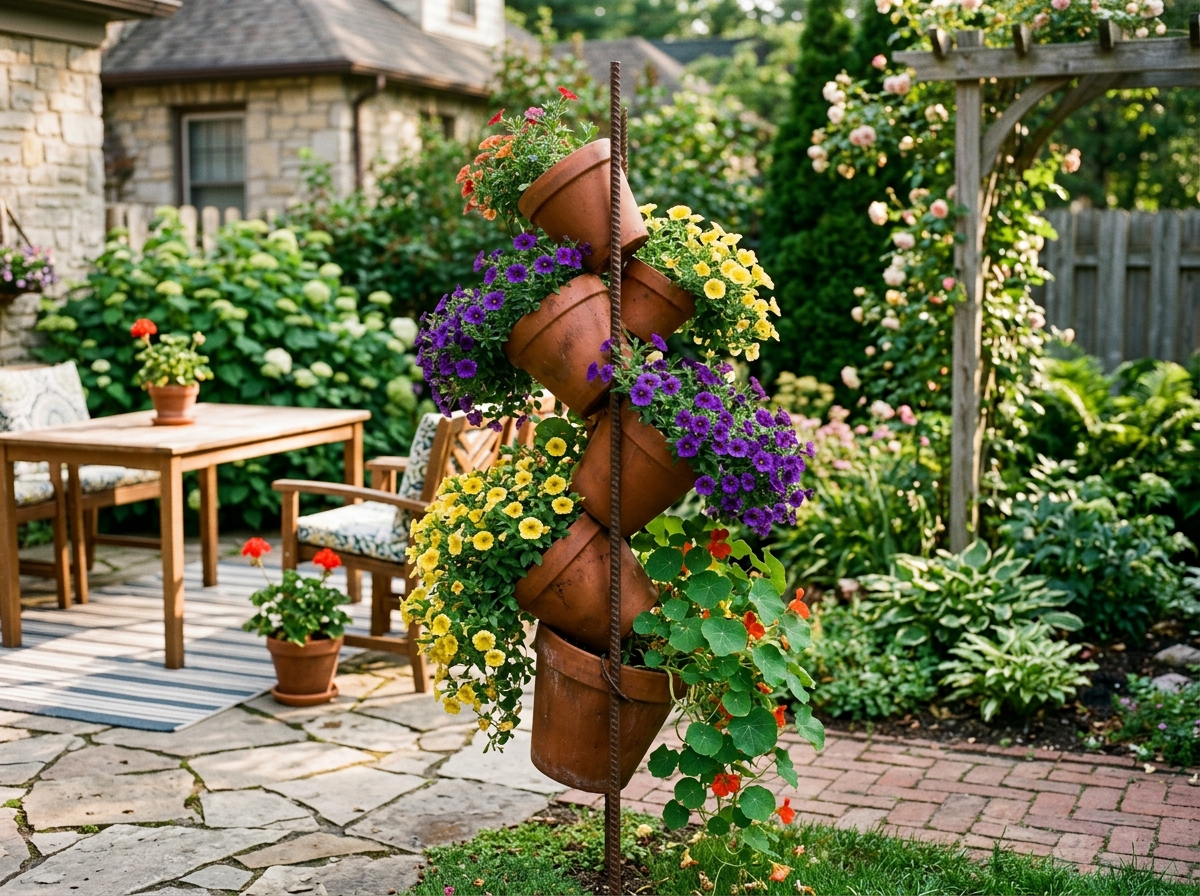
The topsy-turvy pot tower is an ingenious vertical illusion that packs 15 to 20 flowering annuals into a 16-inch circular footprint. By threading standard terracotta pots through their center drainage holes over a sturdy steel rebar stake at alternating 30-degree angles, you create a spiral tower of cascading flowers.
Recommended Plant Palette
- Calibrachoa / Million Bells (‘Superbells Grape Punch’)
- Wave Petunias (‘Easy Wave Yellow’)
- Trailing Nasturtium (‘Alaska Variegated’)
- Trailing Verbena (‘Superbena Sparkling Amethyst’)
- Creeping Thyme
Mounting, Hardware & Construction
Drive a 5-foot piece of 1/2-inch steel rebar 18 inches into firm garden ground (or set into a heavy base pot filled with quick-set concrete). Slide a 12-inch terracotta base pot down over the rebar and fill with potting soil. Thread subsequent 10-inch, 8-inch, and 6-inch pots over the rebar, tilting each in alternating directions.
Irrigation & Maintenance: Fill each angled pot with premium container potting mix. When watering, pour water generously into the top pot; excess water naturally cascades downward through the rebar channel to irrigate lower tiers.
🌿 Horticulturist Pro-Tip: Terracotta absorbs midday solar heat quickly. Mix water-retaining polymer crystals or 20% moisture-retentive coconut coir into the potting soil to buffer against midsummer afternoon drying.
#08. The Hanging Shoe Organizer Salad Wall
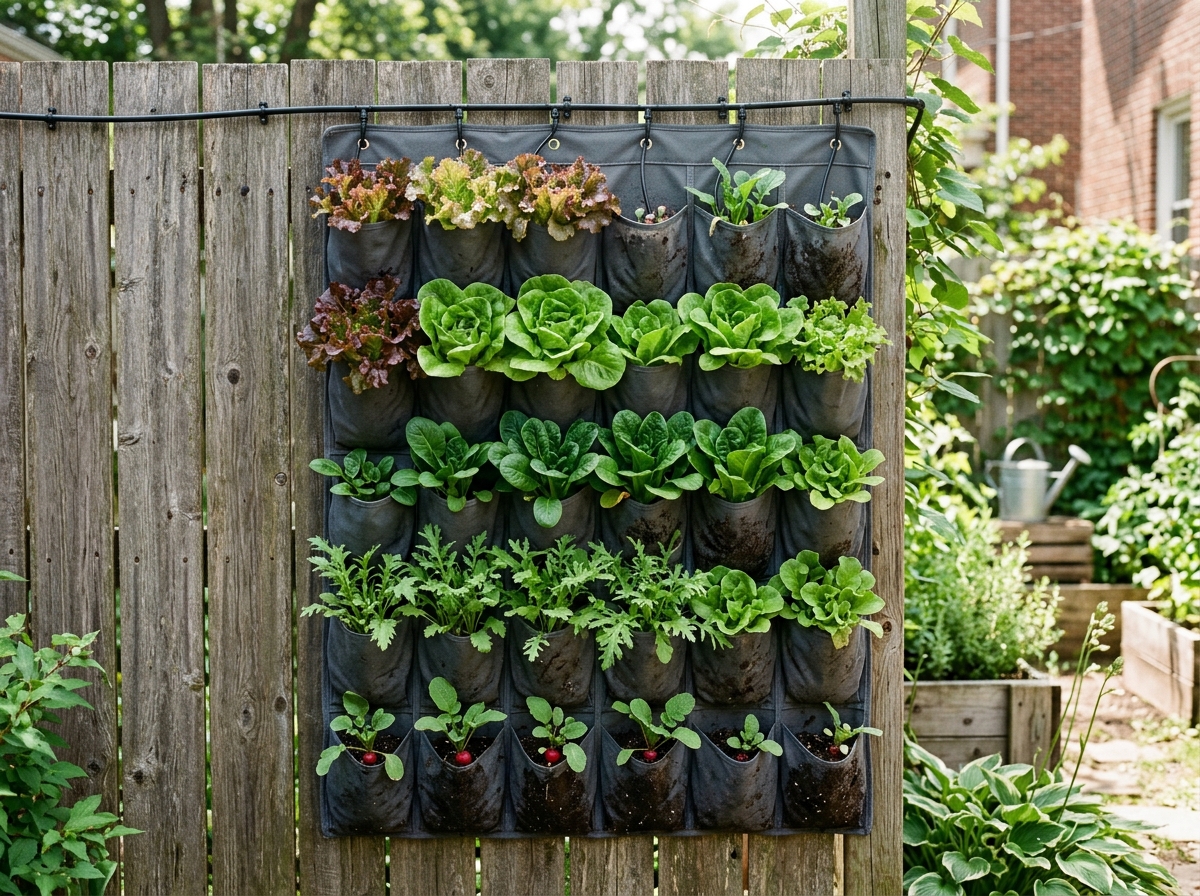
For renters, students, and urban gardeners on a shoe-string budget under $15, a heavy-duty fabric shoe organizer is one of the most productive vertical planters in existence. Featuring 24 individual breathable pockets, it transforms an empty wooden boundary fence into a daily organic salad bar.
Recommended Plant Palette
- Black Seeded Simpson Looseleaf Lettuce
- Baby Spinach (‘Bloomsdale Long Standing’)
- Wild Italian Arugula (Rocket)
- French Breakfast Radishes
- Garlic Chives (Allium tuberosum)
Mounting, Hardware & Construction
Choose breathable polyester canvas or non-woven geotextile organizers (never cheap clear vinyl, which cooks plant roots). Screw heavy-duty stainless steel cup hooks into the horizontal crossbeam of a sturdy wooden fence and hang the reinforced grommets securely.
Irrigation & Maintenance: Fill each individual pocket 3/4 full with rich organic potting soil amended with worm castings. Sow 3 to 4 seeds per pocket, thinning to the single strongest seedling. Cut outer leaves weekly for continuous salads.
🌿 Horticulturist Pro-Tip: Fabric shoe organizer pockets drain effortlessly through the woven seams, preventing soggy roots. Run a 1/4-inch drip irrigation line with 0.5 GPH micro-emitters pinned inside each pocket on a digital hose timer for effortless automated watering.
#09. The Espaliered Fruit Tree Wall
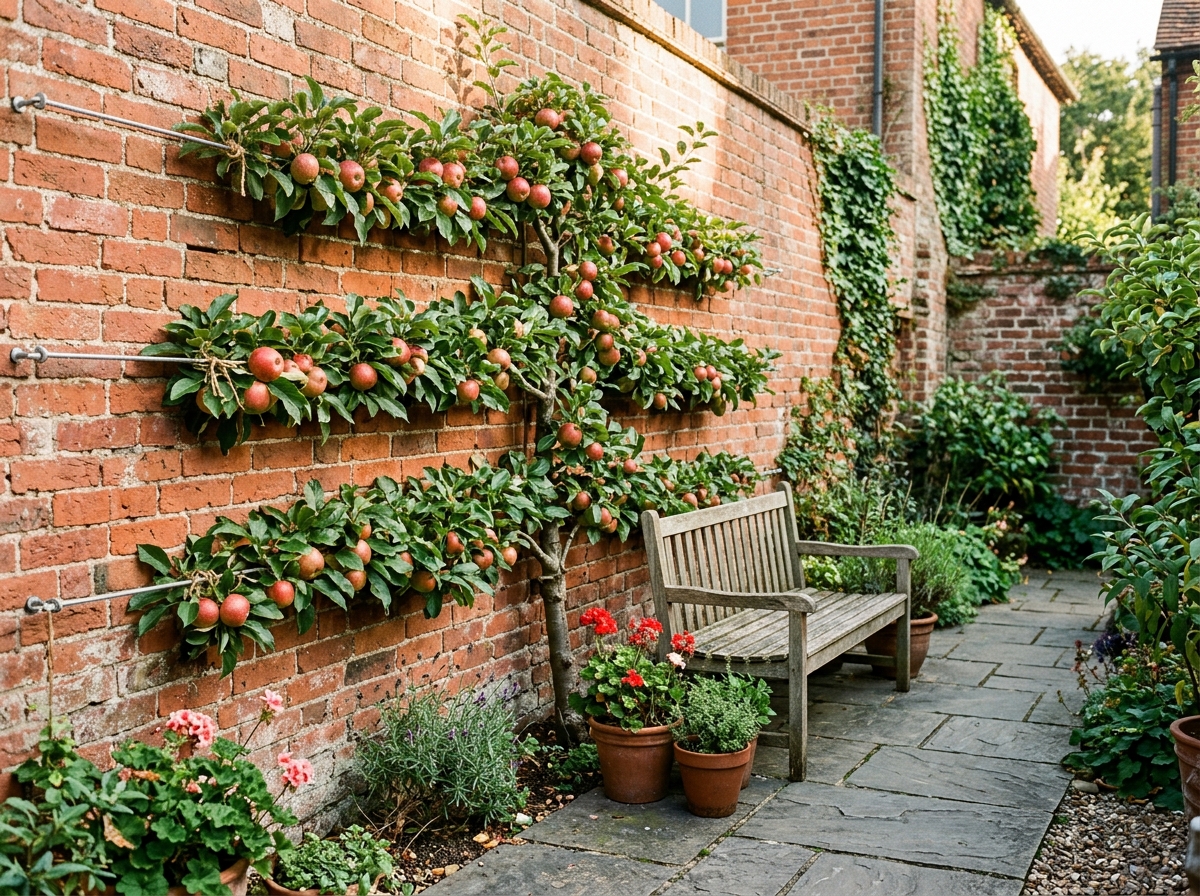
Espalier is the centuries-old European horticultural art of training fruit tree branches flat against a two-dimensional plane. It enables urban and small-yard homeowners to harvest 30 to 50 pounds of premium orchard fruit from a wall footprint less than 12 inches deep.
Recommended Plant Palette
- Dwarf Apple (Malus domestica ‘Honeycrisp’ or ‘Cox\’s Orange Pippin’)
- European Pear (Pyrus communis ‘Conference’)
- Brown Turkey Fig (Ficus carica)
- Espaliered Peach or Nectarine
Mounting, Hardware & Construction
Install eye-bolts with wall anchors into a south-facing brick or masonry wall. Stretch galvanized 14-gauge high-tensile wire horizontally at 16-inch vertical intervals, tightened with turnbuckles. Plant a semi-dwarf bare-root whip 8 inches out from the wall.
Irrigation & Maintenance: South and west-facing masonry walls absorb daytime solar thermal heat and radiate it back onto the tree at night. This thermal buffer protects delicate spring blossoms from late frosts and dramatically boosts fruit sugar brix levels.
🌿 Horticulturist Pro-Tip: Perform summer pruning in late July: prune back vigorous non-fruiting vertical shoots to three leaves past the basal cluster. This redirects the tree’s energy from vegetative leaves into fattening sweet fruit buds for next season.
#10. The Tiered Hanging Rain Gutter Garden
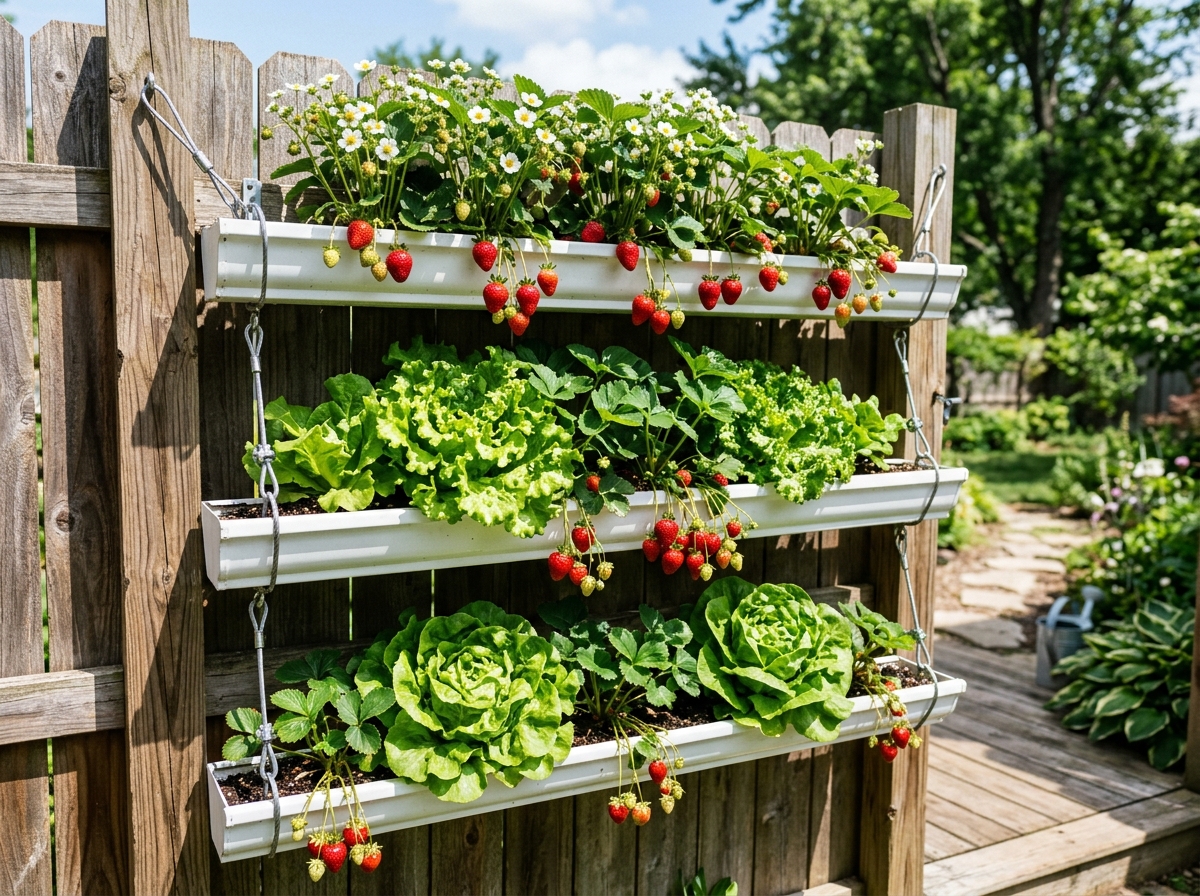
Standard 5-inch K-style aluminum or vinyl rain gutters make phenomenal shallow vertical planting troughs. Suspended by aircraft cables or screwed to fence posts, three to four tiers of gutters utilize narrow, unplantable vertical wall corridors for continuous gourmet food production.
Recommended Plant Palette
- Everbearing Strawberries (‘Albion’ or ‘Seascape’)
- Butterhead Lettuce (‘Buttercrunch’)
- Creeping Microgreens
- Chives & Dwarf Cilantro
- Violas & Edible Pansies
Mounting, Hardware & Construction
Cut gutters into 4-to-6 foot sections and attach end caps sealed with silicone. Drill 1/4-inch drainage holes every 4 inches along the bottom. Drill 3/8-inch holes near the ends, thread 1/8-inch galvanized vinyl-coated steel aircraft cable through, and secure each shelf with wire rope cable clamps.
Irrigation & Maintenance: Rain gutters hold approximately 4 inches of soil depth, making them ideal for shallow-rooted crops like strawberries, lettuce, spinach, and radishes. Use a lightweight moisture-retentive soilless blend (50% coco coir, 30% compost, 20% vermiculite).
🌿 Horticulturist Pro-Tip: Strawberries grown in elevated hanging gutters remain completely suspended in mid-air—preventing slugs, pillbugs, and soil-borne fungal spores from ever touching the ripening fruit.
#11. The Woven Willow Screen with Conical Baskets
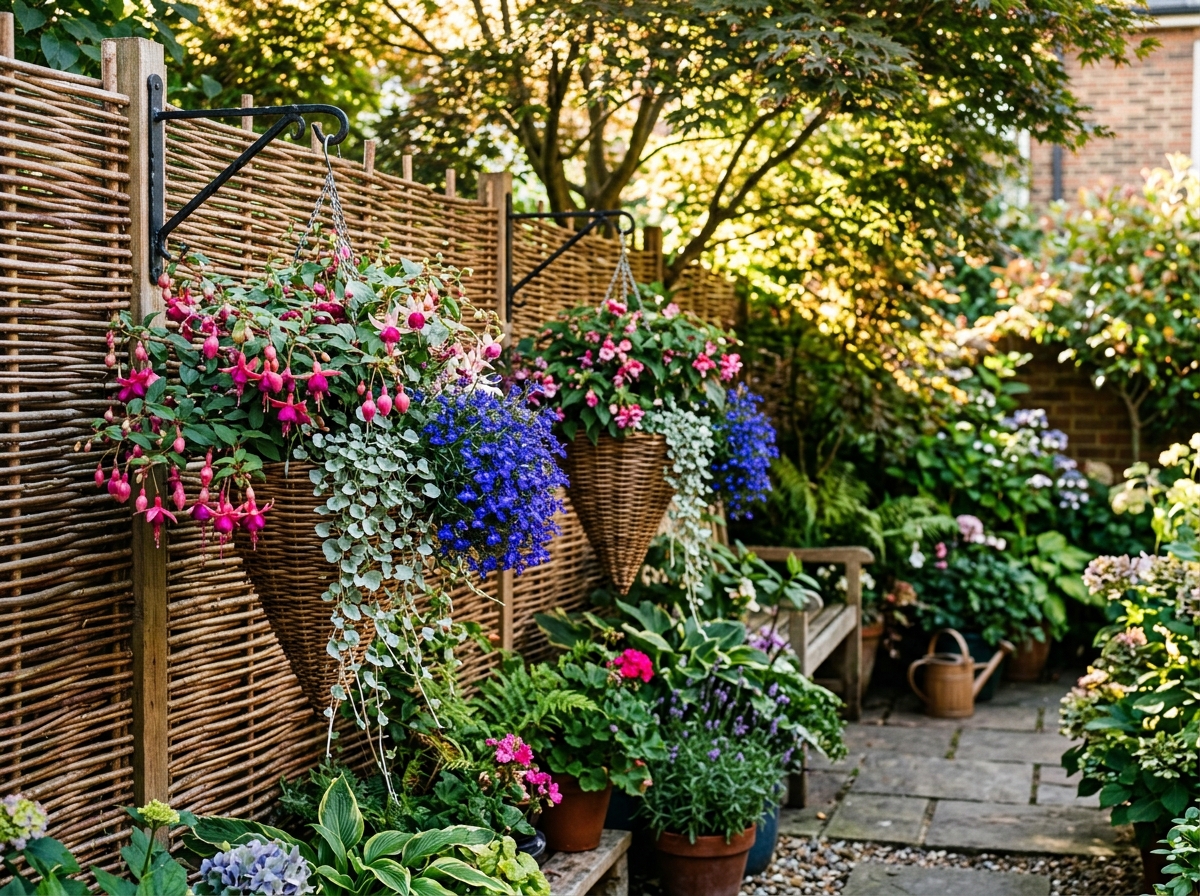
For cottage, country, and romantic garden aesthetics, a natural woven willow or hazel wattle hurdle screen brings organic warmth to cold boundaries. Accenting the screen with hanging conical woven wicker baskets creates high-impact vertical focal points ideal for shadier courtyards.
Recommended Plant Palette
- Trailing Fuchsias (‘Swingtime’ or ‘Dark Eyes’)
- Silver Falls Dichondra (Dichondra argentea)
- Royal Blue Lobelia (Lobelia erinus)
- Bacopa (Sutera cordata)
- Trailing Ivy Geraniums
Mounting, Hardware & Construction
Woven willow hurdle screens are lashed to sturdy wooden 3×3 posts using black zip-ties or copper wire. Mount decorative wrought-iron hanging basket brackets securely to the supporting posts, suspending conical wicker or moss-lined wire cone baskets.
Irrigation & Maintenance: Line the interior of wicker cone baskets with pre-formed coco coir liners. Place a shallow plastic saucer inside the bottom of the liner before adding soil to act as a micro-water reservoir.
🌿 Horticulturist Pro-Tip: Hummingbirds are wildly attracted to the dangling pendulous blooms of trailing fuchsias. Positioning these baskets at eye level beside a patio bench lets you watch hummingbirds feed up close all afternoon.
#12. The Barnwood Mason Jar Succulent Sconces
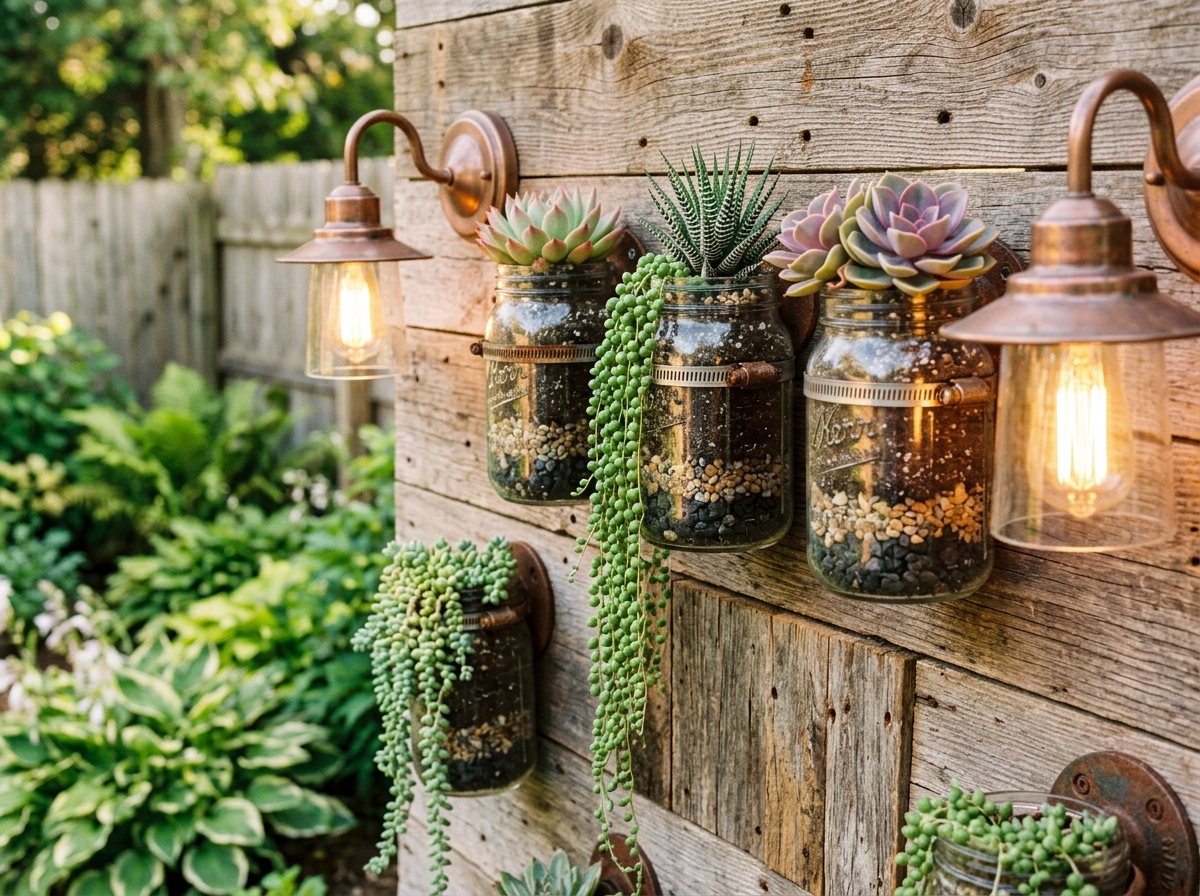
Bring rustic living artwork to an outdoor patio or covered porch with vertical barnwood mason jar sconces. Pairing reclaimed weathered timber with vintage glass jars and warm copper sconces creates a tactile, conversation-starting vertical display that requires minimal watering.
Recommended Plant Palette
- String of Pearls (Senecio rowleyanus)
- Echeveria (‘Lola’ or ‘Perle von Nurnberg’)
- Zebra Haworthia (Haworthiopsis fasciata)
- Burro’s Tail (Sedum morganianum)
- Ghost Plant (Graptopetalum paraguayense)
Mounting, Hardware & Construction
Fasten 3-inch stainless steel hose worm-gear clamps to a 2×8 weathered cedar or barnwood board with wood screws. Tighten the metal band securely around the neck of a 32-ounce wide-mouth glass mason jar. Mount the board to your wall using heavy-duty D-ring picture hangers.
Irrigation & Maintenance: Because glass jars lack bottom drainage holes, fill the bottom 1.5 inches with horticultural charcoal and pea gravel to catch excess water, topped with sharp gritty succulent potting mix. Water sparingly with a squeeze pipette once every two weeks.
🌿 Horticulturist Pro-Tip: Keep jar sconces in bright indirect light or morning sun under a covered veranda. Harsh midday direct sun can cause glass jars to heat up like mini greenhouses, baking delicate succulent roots.
#13. The Vertical Aeroponic Garden Tower Column
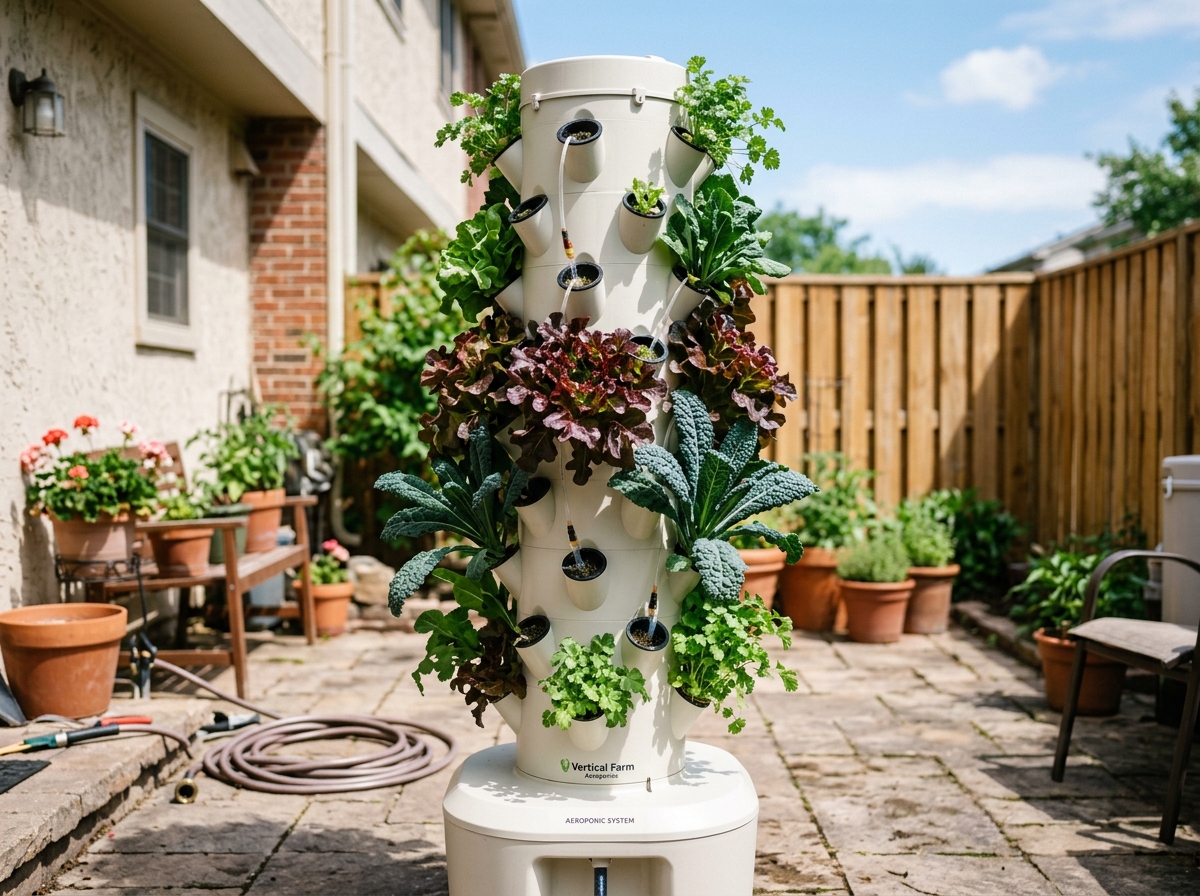
Representing the cutting edge of modern urban horticulture, vertical aeroponic and hydroponic towers recycle water in a closed-loop system, using 90% less water and 95% less land than conventional gardening while growing produce three times faster.
Recommended Plant Palette
- Tuscan Lacinato / Dinosaur Kale (Brassica oleracea)
- Red Oakleaf & Romaine Lettuce
- Fresh Cilantro & Basil
- Bush Variety Cherry Tomatoes (Micro-Tom)
- Swiss Chard (‘Bright Lights’)
Mounting, Hardware & Construction
Freestanding self-contained modular column standing 5 feet tall on a 20-gallon base water reservoir. Requires zero soil and zero structural wall anchoring; simply place on a level sunny patio surface near an outdoor GFCI electrical outlet.
Irrigation & Maintenance: A submerged submersible pump cycles nutrient-rich water from the reservoir to the top of the tower on an automated timer (e.g., 15 minutes on, 15 minutes off), showering plant roots hanging freely inside the dark column.
🌿 Horticulturist Pro-Tip: Because roots receive 100% oxygenation rather than struggling through dense soil, lettuces and greens reach full harvest maturity in just 21 to 28 days from seedling transplant.
#14. The Pergola Pillar Climbing Floral Pillar
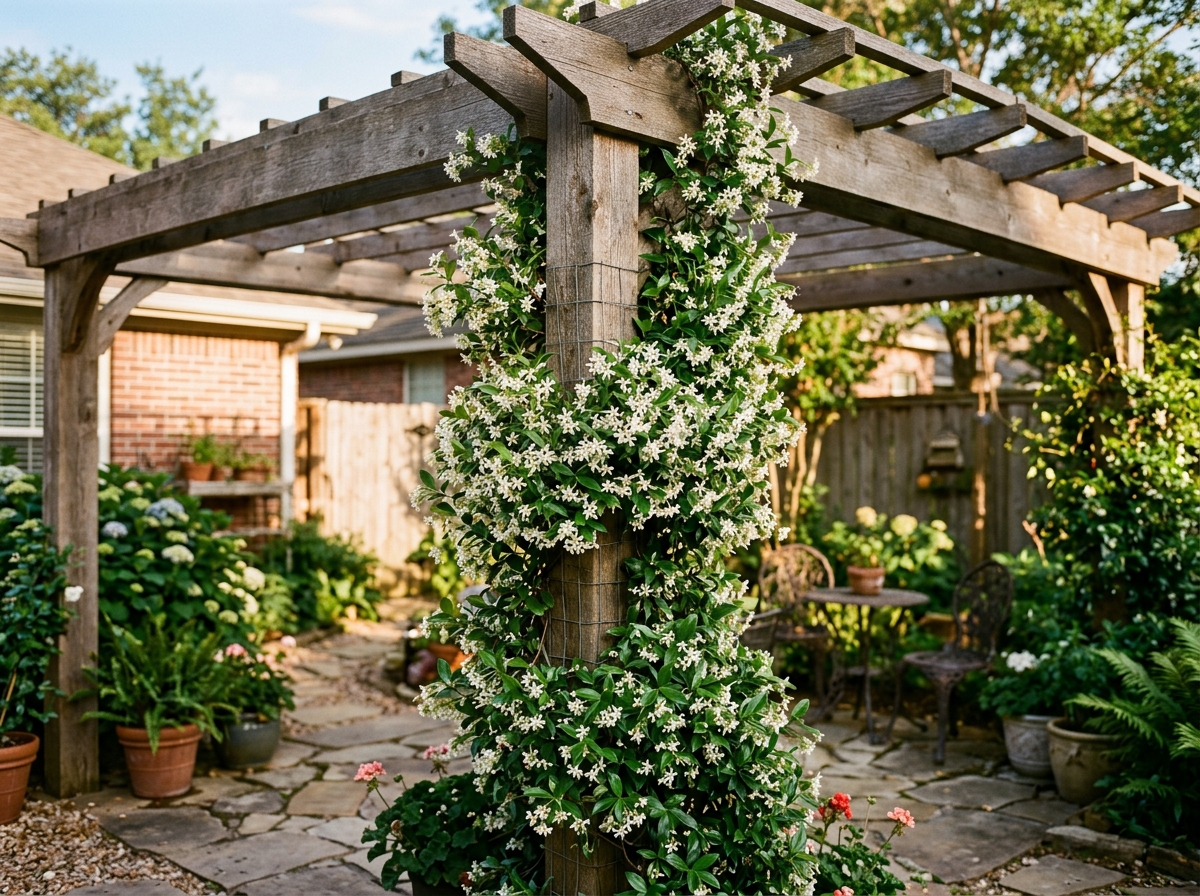
Pergolas, covered patios, and porch overhangs already possess four massive vertical structural posts that are usually left as blank timber. Wrapping these corner pillars in wire netting transforms them into fragrant, living floral pillars that draw the eye upward and scent the entire yard.
Recommended Plant Palette
- Evergreen Star Jasmine (Trachelospermum jasminoides)
- Climbing Hydrangea (Hydrangea anomala petiolaris)
- Madame Alfred Carriere Climbing Rose
- Bower Vine (Pandorea jasminoides)
- Hardy Passionflower (Passiflora caerulea)
Mounting, Hardware & Construction
Staple 2-inch black vinyl-coated welded wire mesh or stainless steel trellis wire tightly around the rough-sawn cedar post using heavy-duty fence staples, leaving a 1/2-inch space for stems to twine freely.
Irrigation & Maintenance: Star Jasmine is an evergreen climber in USDA Zones 8–11 that produces thousands of intensely fragrant starry white blooms in late spring and summer. Prune lightly immediately following the main summer bloom flush to maintain a tidy column.
🌿 Horticulturist Pro-Tip: Star Jasmine twines via stems rather than clinging with invasive aerial rootlets, meaning it will never damage, rot, or degrade the underlying wooden pergola post.
#15. The Repurposed Victorian Iron Gate Trellis
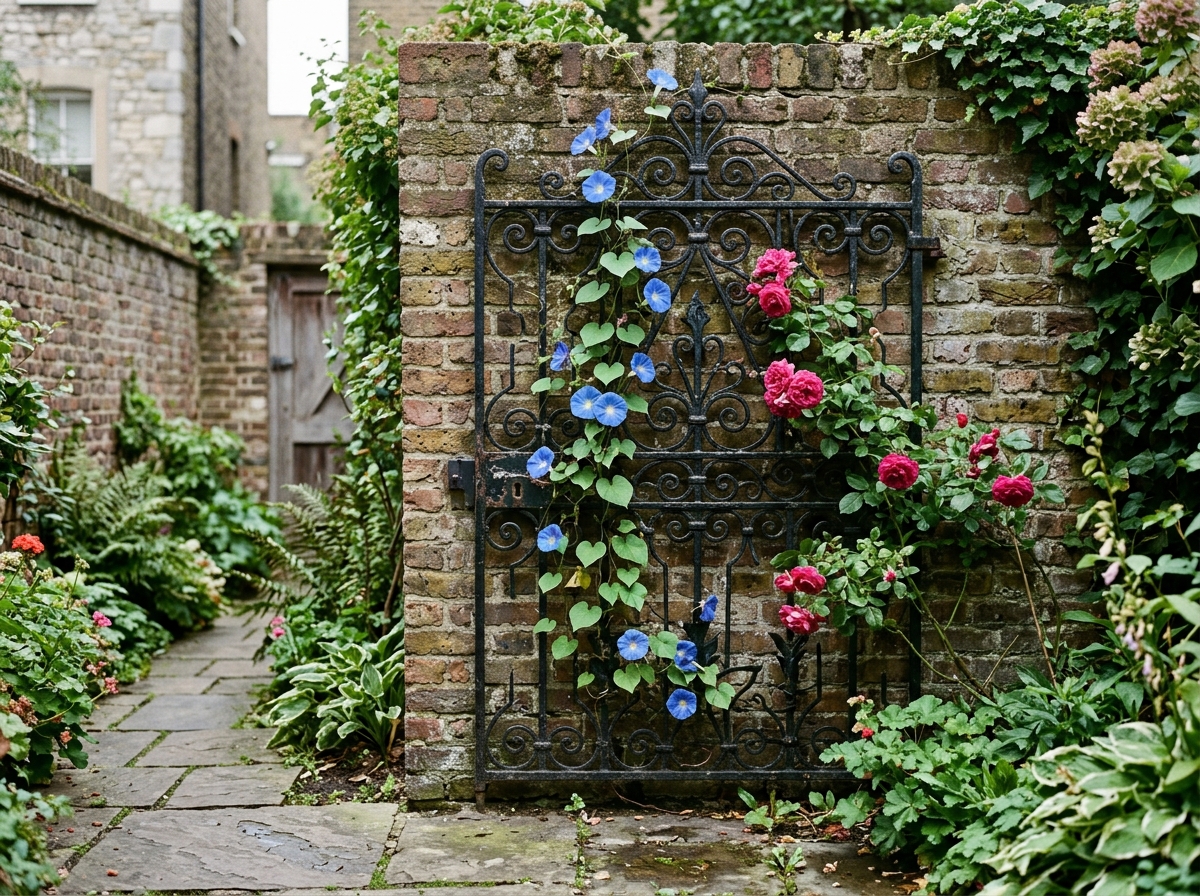
Salvaged architectural antiques—like an authentic Victorian wrought-iron gate, a cast-iron balcony railing, or a decorative window grille—bring instant heritage soul to a small contemporary garden. Mounted flat against a blank garage wall or fence, the black metal scrollwork serves as a heavy-duty trellis that lasts a lifetime.
Recommended Plant Palette
- Heavenly Blue Morning Glories (Ipomoea tricolor)
- Climbing Bourbon Roses (‘Zephirine Drouhin’ thornless)
- Trumpet Honeysuckle (Lonicera sempervirens)
- Spanish Flag Vine (Mina lobata)
- Black-Eyed Susan Vine (Thunbergia)
Mounting, Hardware & Construction
Wrought iron is heavy. Fasten heavy-duty masonry sleeve anchors or lag bolts into brick mortar joints, using 2-inch metal standoff pipe sleeves to hold the gate 2 inches off the brick surface. This air gap allows vines to loop freely through the metalwork.
Irrigation & Maintenance: Wrought iron absorbs summer sun heat; choose heat-loving vigorous twining annuals like Morning Glories and Thunbergia that thrive on warm metal scaffolding.
🌿 Horticulturist Pro-Tip: Treat vintage iron with a clear satin rust-inhibiting sealant (like Penetrol or Rust-Oleum clear) before mounting. It preserves the romantic authentic antique patina while preventing rust streaks from staining your light brick or stone walls.
5 Golden Rules for Successful Vertical Gardening
Before driving your first screw or hanging a single planter, ensure your vertical installation follows these essential structural and horticultural principles:
1. Calculate Saturated Weight & Anchor to Solid Structural Studs
A dry vertical planter may weigh only 15 pounds, but when fully soaked with water and filled with mature plant roots, that same planter can weigh 60 to 80 pounds. Never rely on plastic drywall anchors or flimsy fence pickets. Always anchor vertical mounting hardware directly into solid 4×4 fence posts, wall studs, or solid masonry using 3-to-4 inch exterior-grade stainless steel lag screws.
2. Design for the Vertical Microclimate (Top Heat vs Bottom Shade)
A 6-foot vertical wall contains multiple distinct microclimates. The top tier receives maximum direct sun and wind exposure, causing soil to dry out rapidly. The bottom tier receives runoff water and is partially shaded by the foliage above. Always plant your most drought-hardy, heat-loving sun-worshippers (herbs, succulents, petunias) at the top, and shade/moisture-tolerant varieties (ferns, hostas, campanula) near the base.
3. Install Automated Micro-Drip Irrigation
Because vertical planters have limited soil volume, hand watering with a hose is time-consuming, uneven, and often washes soil out of pockets. Run a 1/4-inch black drip distribution tubing with pressure-compensating 0.5 GPH emitters pinned into each planter box or felt pocket, hooked to an inexpensive digital battery hose timer set for 5 to 10 minutes every morning.
4. Match Root Depths with Vertical Container Volumes
Vegetables with deep taproots (carrots, beefsteak tomatoes) struggle in shallow vertical planters. Reserve vertical pockets and gutters for shallow, fibrous-rooted crops: looseleaf salad greens, spinach, strawberries, radishes, and compact herbs. For climbing fruiting crops like cucumbers or beans, plant them in a deep container at the base and train the vines vertically.
5. Protect Supporting Walls with a Waterproof Air Gap Barrier
Constant moisture from watering vertical planters can cause fungal dry rot on wooden fences or efflorescence and damp staining on interior-facing masonry walls. Always install a waterproof barrier (corrugated plastic sheeting, heavy pond liner, or marine plywood) and maintain a 1-to-2 inch open air gap between your plants and the structural wall.
Frequently Asked Questions
What are the best plants for a vertical garden in a small yard?
For herbs: Rosemary, basil, thyme, mint (in separate pots), and parsley. For edibles: Everbearing strawberries, looseleaf lettuce, baby spinach, radishes, and trailing cherry tomatoes. For flowering ornamentals: Calibrachoa (Million Bells), trailing fuchsias, petunias, nasturtiums, and star jasmine. For foliage walls: Boston ferns, heuchera (coral bells), creeping Jenny, and English ivy.
How do you water a vertical garden without making a muddy mess?
The most effective method is automated micro-drip irrigation with pressure-compensating emitters delivering small volumes directly to the root zones. For indoor or patio living walls, include a galvanized drip catch tray or drainage trough at the bottom of the wall to channel excess water into a reservoir or garden bed below.
Will a vertical garden damage my fence or brick wall?
Not if installed with proper precautions. The key is never mounting wet fabric or soil containers directly against siding or wood. Use 1-to-2 inch standoff spacers and a waterproof barrier (like polycarbonate sheeting) behind the planter to create continuous air circulation that keeps the supporting structure bone-dry.
Can I grow vegetables and fruits vertically in a small yard?
Yes! Vertical vegetable gardening is often cleaner and more productive than in-ground gardening. Strawberries, lettuce, spinach, and herbs thrive in hanging rain gutters and pockets. Vining vegetables like pole beans, snow peas, mini cucumbers, and small squash flourish on cattle panel arches and trellises.
How do you winterize an outdoor vertical garden in cold climates?
Because vertical planters are exposed to freezing ambient air on all sides, roots lack the geothermal insulation of in-ground soil. In USDA Zones 7 and colder, treat vertical annuals as single-season crops. For perennials and herbs, move portable ladder shelves into an unheated garage, or wrap wall-mounted planters in several layers of horticultural fleece or burlap before hard freezes.
Grow Upward, Flourish Everywhere
A compact yard is not a limitation—it is a creative invitation to rethink how living space works. With these 15 vertical gardening concepts, you can turn barren fences, blank brick walls, and tight patio corners into flourishing towers of food, fragrance, and color.


0 Comments